
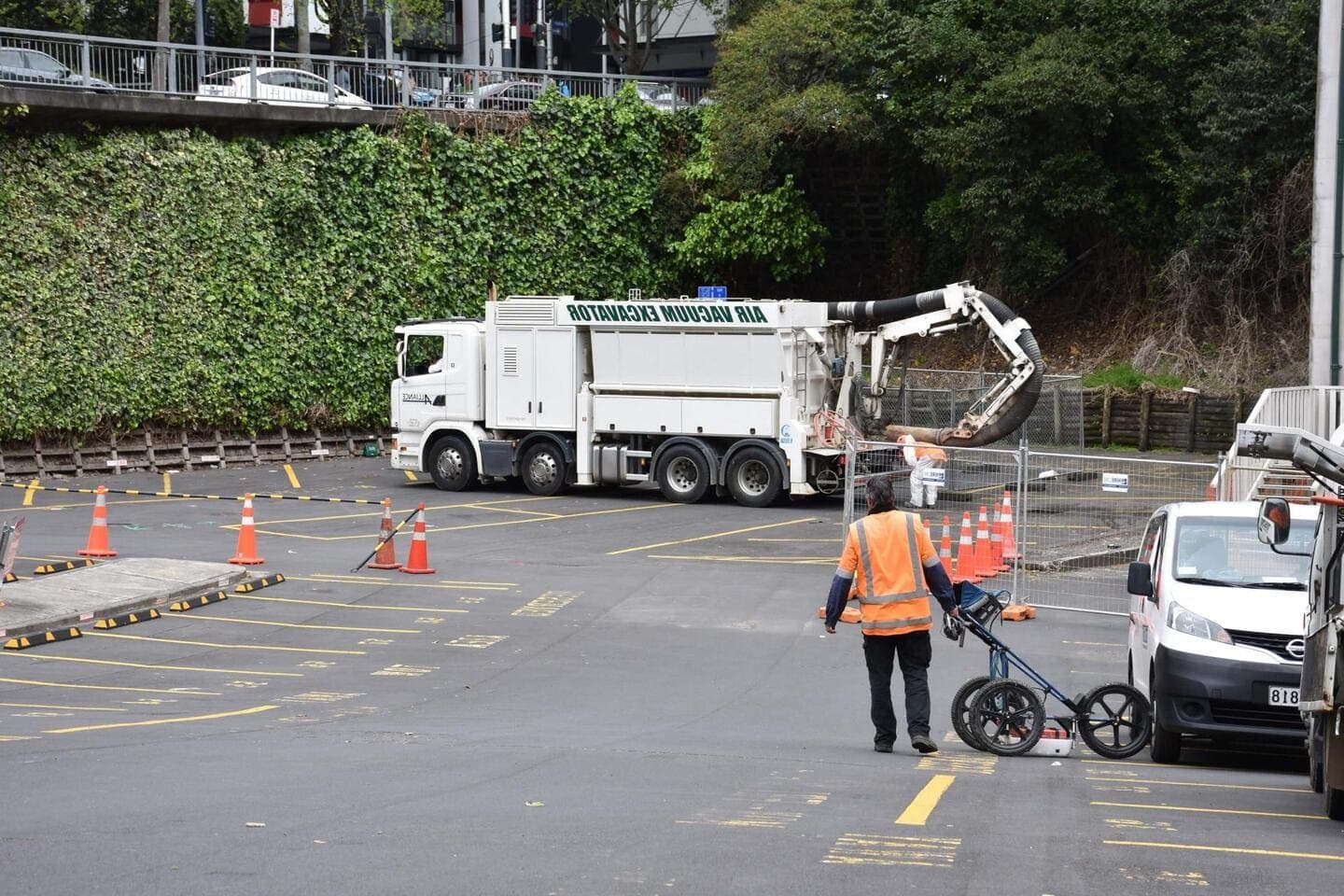
GPR Scanning in Pukekohe
Local ground penetrating radar scanning for Pukekohe and the wider Franklin & Pukekohe area
Since 2015Own locators, hydro-vac & diggersAuckland · Franklin · North Waikato
GPR Scanning for Pukekohe properties, sites and farms
Pukekohe's volcanic loam is one of the better soils for ground penetrating radar. It is relatively dry and uniform, so the radar reaches a useful depth and picks out plastic irrigation mains, old drainage, buried tanks and foundations clearly. That matters on market gardens and packhouse sites where decades of plastic pipe have gone in with no tracer wire and no record. Utility Works scans Pukekohe sites alongside standard locating and potholes with hydro-vac to confirm what the radar shows.
Typical ground penetrating radar scanning jobs in Pukekohe
- Scanning for unmarked plastic irrigation mains across market garden blocks before works
- Concrete scanning for rebar and conduits before coring in packhouse and coolstore slabs
- Finding old tanks, drains and foundations on sites being redeveloped for housing
GPR Scanning, in short
Electromagnetic locators only find metal or a pipe carrying a signal. Plastic water and gas lines with no tracer wire, old septic tanks, culverts, voids, buried foundations and rebar in slabs are invisible to them. Ground penetrating radar sends a pulse into the ground and reads what bounces back, so we can mark those features whatever they are made of. We run radar alongside our other locating methods, confirm anything doubtful by potholing with our own hydro-vac, and supply marks on the ground or a plan for your designer or contractor.
Full details: Ground Penetrating Radar Investigations →Working underground in Pukekohe
Pukekohe sits on the volcanic soils that made it one of New Zealand's best-known market gardening districts. That free-draining loam is kind to growers, but it also lets water from a broken pipe disappear straight down without surfacing, so leaks here often run for months before anyone notices a rising bill.
The town has grown well beyond its market-garden roots, with established streets, newer subdivisions on the fringes and a busy commercial centre. Reticulated water comes through Watercare, while many surrounding rural properties still run on bores, tanks and long private pipe runs that nobody has ever mapped.
Pukekohe is a short drive from our Waiau Pa yard, so it is an easy call-out for everything from pre-dig locates on new builds to tracing old galvanised lines under packhouses, yards and commercial premises along the main streets.
When Pukekohe’s buildings went up, and what radar will find
The age of a house tells us what pipe and cable to expect underneath it before we arrive.
Before 1960
Pukekohe became a town district in 1905 and a borough in 1912, and its oldest houses sit on the streets nearest King Street and the railway station, which has been on the main trunk line since 1907. The whole town held only about 3,300 people in 1945.
1960s to 1980s
The post-war boom doubled Pukekohe to 6,547 people by 1966. Most of the weatherboard and brick-veneer housing on the flat land around the centre and on the lower slopes of Pukekohe Hill dates from these two decades.
1985 to 2000
Growth slowed to a steady trickle. The town reached 10,410 people in 1991 and 13,110 in 2001, mostly through infill on older sections and small subdivisions at the fringes.
Since 2000
Pukekohe has more than doubled since 2001, to 27,042 at the 2023 census. The Pukekohe-Paerata Structure Plan, adopted on 6 August 2019, sets aside 1,300 hectares of future urban land for about 12,500 more homes over 30 years, so the newest streets now ring the whole town.
Plastic pipe, old tanks and slabs under Pukekohe
Around the town centre and the railway the houses are old enough to still run galvanised steel laterals, and in Pukekohe's dry, free-draining loam those pipes rust through from the outside as well as the inside. A pinhole on a galvanised line here almost never shows at the surface, because the water goes straight down toward the basalt. The streets from the 1960s and 70s are where we meet asbestos-cement mains and copper laterals; the AC cracks at its joints and under the weight of a widened driveway or a new vehicle crossing.
Houses from the late 1980s and 90s can have Dux Quest polybutylene inside and alkathene or early PVC outside, and it is the fittings, not the pipe, that let go. Everything built under the structure plan is MDPE with tracer wire. The market gardens around the town are different again: growers draw from the shallow basalt aquifer and the deeper Kaawa aquifer, and the bore lines and irrigation mains have gone in over decades without tracer wire, so an electromagnetic locator reads nothing until a digger finds the pipe the hard way. That is why we bring GPR and the hydro-vac to most Pukekohe jobs.
How radar performs in Pukekohe’s volcanic loam
Pukekohe Hill is a shield volcano, one of at least 82 in the South Auckland volcanic field, and at about 550,000 years old it is among the youngest. The hill is almost entirely basalt lava flows, and the town and its market gardens sit on the deep red-brown loam that weathered out of that basalt. The loam drains so well that water from a broken pipe soaks away rather than pooling, which is why Pukekohe leaks turn up as a high meter reading long before anyone sees a wet patch.
The same loam is one of the best grounds for ground penetrating radar: dry, uniform and free of the clay that soaks up the signal elsewhere in Franklin. The catch is what sits under it. The weathered layer over hard basalt varies from a couple of metres to ten or more, so a trench can run clean for twenty metres and then hit rock. Below that again is the shallow basalt aquifer, where Auckland Council's monitoring still finds nitrate above the drinking water limit in many bores and springs after decades of market gardening.
Who owns the services under Pukekohe
Which network a service belongs to decides who fixes it, who you call first and whose plans a beforeUdig request returns.
Water supply
Watercare supplies Pukekohe. The town and Buckland can draw up to five million litres a day from two bores at Hickey's Recreation Reserve, off Crisp Avenue and Dublin Street; that plant was wrecked in the January 2023 floods and only came back into service on 5 December 2024. Watercare's side ends at the outlet of the meter fitting closest to your private pipe.
Wastewater
Watercare runs the sewers too. Pukekohe's wastewater goes to the Pukekohe treatment plant, doubled to 60,000 households' capacity in early 2023, which discharges to Parker Lane Stream. Rural blocks are on septic tanks.
Electricity
Counties Energy owns the lines. Its network runs coast to coast from southern Papakura to Mercer, and it is planning for the 12,500 extra Pukekohe-Paerata dwellings.
Gas
Pukekohe is reticulated for natural gas on Vector's Auckland network, with its own gas gate.
Fibre and phone
Chorus owns both the copper and the fibre; the Pukekohe UFB build is listed as complete.
beforeUdig plans
A request here returns Counties Energy, Watercare, Vector Gas and Chorus. It will not show your lateral past the meter or the bore and irrigation lines on a market garden.
Jobs we have done here
Recent work around Pukekohe
In Tony's words, from the Utility Works Facebook page. Clients unnamed, as they are there.
“Early start and a busy morning for the team getting an intersection service mark-out completed in Pukekohe for one of our regular civil contractor clients, who were raring to go.”
Underground Service Locating · PukekoheTony Eggleton · September 2026
“Busy day for the crew getting services marked out for a major intersection upgrade in Pukekohe.”
Underground Service Locating · PukekoheTony Eggleton · August 2026
“Another residential leak detected, repaired and reinstated in Pukekohe.”
Leak Detection · PukekoheTony Eggleton · July 2025
One crew for Pukekohe: find it, dig it, fix it.
Pukekohe is about 15 minutes from our Waiau Pa yard, so travel adds almost nothing to a quote and we can often fit a leak check in on the same day you call.
Get a free quoteNeed ground penetrating radar scanning in Pukekohe? Call us for a free, no-obligation quote.
Free, no-obligation quote · Mon–Fri 7am–5pm · Auckland, Franklin & North Waikato
Google reviews
What customers say
“Prompt service & fair pricing. Tony and his team — sharp eye for detail and out of the box problem solving paired with a high standard of workmanship.”
Richard La Trobe · Google · October 2026
“Really happy with the work to install our underground services. Highly recommend.”
Sarah Walworth · Google · October 2026
“The only company we trust… reliable, cost effective, and honest service from A to Z. 100% confidence in this company.”
Darrel Assink · Google · September 2026
Our Projects
Tuakau, North Waikato
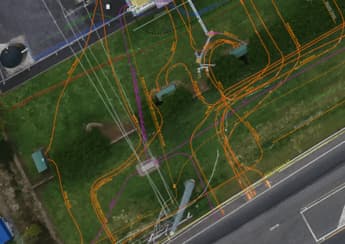
Services Detection & Mapping in Tuakau
A local power network provider in Pukekohe needed expert service detection and mapping. With multiple high-voltage cables traced and marked out, duct and drainage tracing, water mains tracing and multiple communications cables in the vicinity, the project required our specialist services and expertise.
Read the case study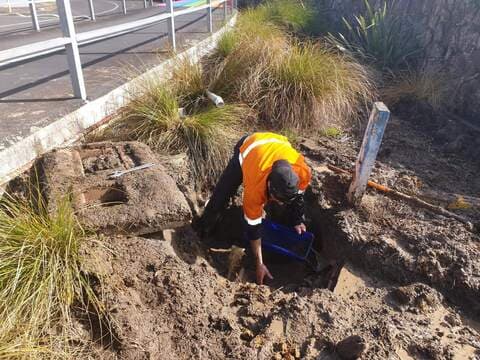
West Auckland
Campus Leak Detection & Repair
After suffering long-term issues with water loss, system configuration and location, Utility Works was engaged to find and repair the leaks at a West Auckland campus. The site spanned over 150 acres with extensive buildings and intertwining historic and modern piping networks. The project involved extensive system isolation and configuration testing, GPR and pipe tracing, re-mapping and full leak detection surveying. Once the losses were located, over 14 underground leaks were excavated and repaired. From initial engagement to completion of the first stage of repairs, the campus saw an 83% reduction in minimum night-flow loss.
Read the case studyGPR Scanning in Pukekohe: your questions
Can you find plastic irrigation mains on a Pukekohe market garden?
Will you hit rock digging a water main in Pukekohe?
Ready when you are.
Tell us what you’re seeing or what you’re planning. You’ll get a straight answer, a free quote and one crew that does the whole job.
Mon–Fri 7am–5pm · Waiau Pa, South Auckland · Auckland, Franklin & North Waikato