
Underground work in West Auckland
West Auckland grew in three pushes. The railway came through in 1880 and 1881 and New Lynn, Henderson and Glen Eden became boroughs, but the big build followed the Northwestern Motorway in the 1950s: Te Atatū went from farmland and brick pits to suburb inside ten years, Glen Eden's population tripled between 1951 and 1961, and Massey and West Harbour were laid out across the hills from the 1970s to the 1990s. The third push is still running: Hobsonville's airfield was sold for housing in 2002 and is planned for 4,500 homes, and Kumeū-Huapai went from 1,455 people in 2013 to 6,948 in 2023.
That mix sets the jobs. In the 1960s streets of Te Atatū, Glen Eden and Henderson we trace galvanised and copper laterals off asbestos-cement mains, and a high bill usually ends in a water main repair or a new MDPE main from the Watercare meter to the house. On the 1980s hills of Massey and West Harbour the failures are polybutylene fittings. In Hobsonville Point, Whenuapai and Westgate the pipe is new PE and the risk is a crushed service under fresh landscaping that the as-built never recorded.
Underneath is Waitematā sandstone weathered to clay, with Waitākere volcanic conglomerate at Titirangi and Swanson and alluvial clay and peat on the Henderson Creek flats. It holds water all winter and soaks up radar, so acoustic work, tracing and hydro-vac potholing do more here than GPR. Watercare supplies the region, Vector runs the lines and the gas, and Chorus built the fibre.
What we do in West Auckland
Leak Detection West Auckland
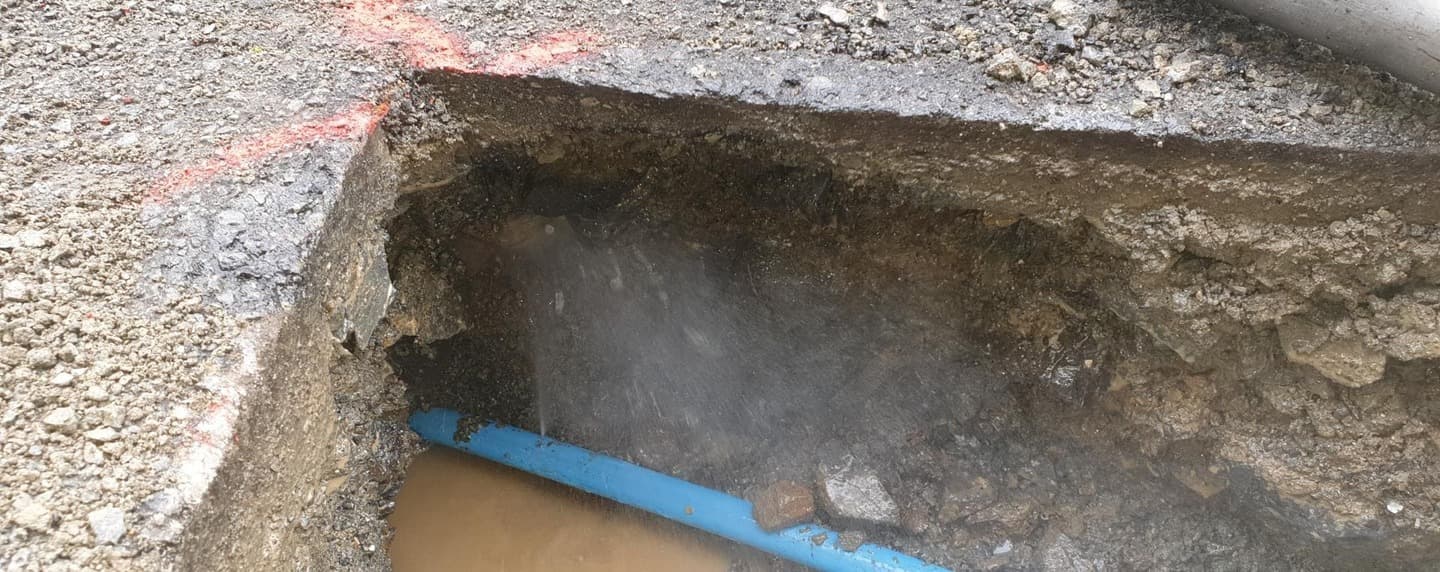
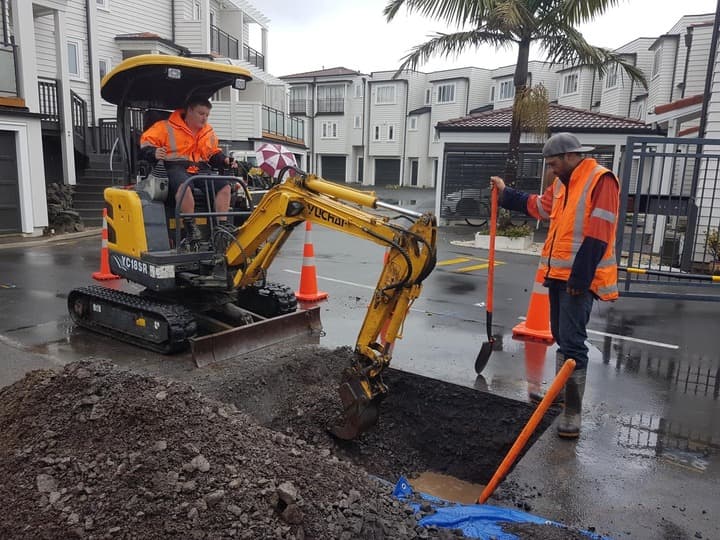
Water main repair in West Auckland starts at the Watercare meter. Everything from the meter outlet to the house is private, and on the 1960s streets of Te Atatū, Henderson and Glen Eden that private main is often the original galvanised or copper line, pinholing in clay that stays wet from May to October.
Learn more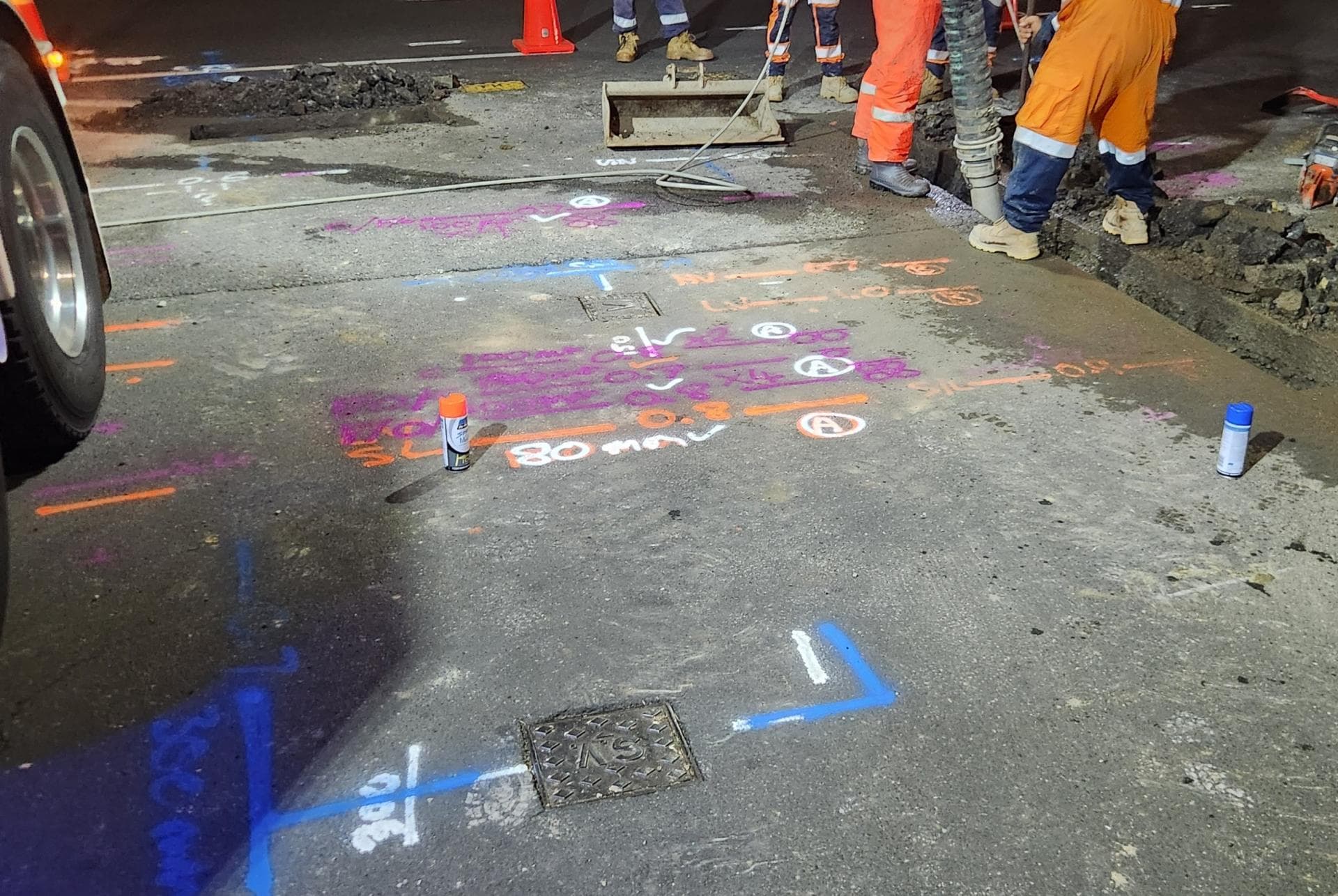
Underground Service Locating West Auckland
West Auckland is the fastest-growing corner of the city underground as well as above it. Upper Harbour added 27 percent more dwellings between the 2018 and 2023 censuses, Hobsonville Point is heading for 4,500 homes, and Watercare is pushing the Northern Interceptor through to Rosedale and on to Westgate and Henderson.
Learn more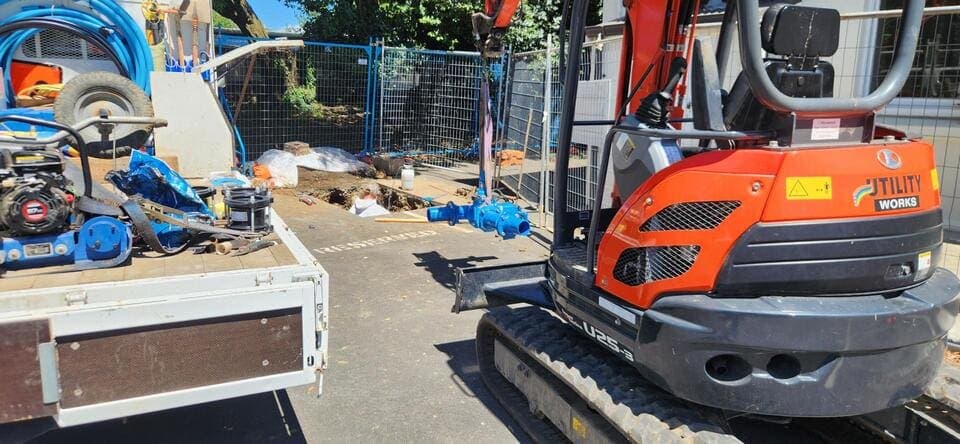
Water Mains Installation & Replacement
Failed galvanised or asbestos-cement mains renewed, new supply lines laid and tested, and the surface put back, across West Auckland.
Learn more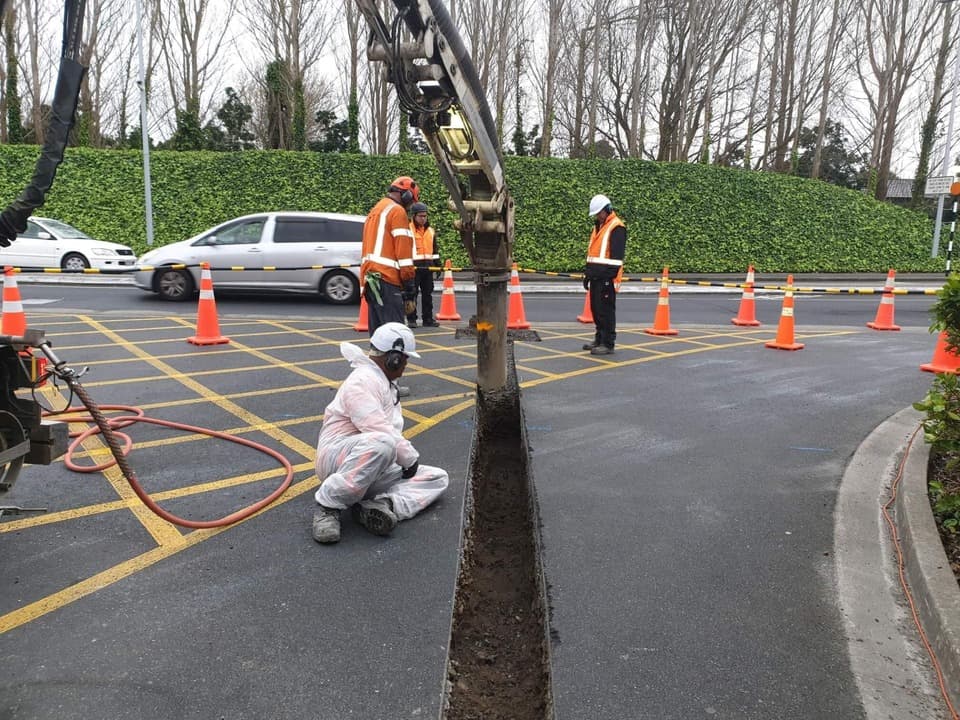
Complete Utility Installation
Power, water, comms and drainage trenched or drilled and connected for new builds, subdivisions and site upgrades in West Auckland.
Learn moreWhen West Auckland’s homes were built
The age of a house tells us what pipe and cable to expect underneath it before we arrive.
Before 1960
Henderson, New Lynn and Glen Eden grew as railway boroughs, with New Lynn's brickyards working the local clay from 1852. Te Atatū and Hobsonville were farms and clay pits, and Titirangi a bush township along Scenic Drive.
1960s to 1980s
The motorway split Te Atatū in 1961 and both halves went suburban within ten years, the peninsula mostly one builder's low-cost homes. Glen Eden and Henderson filled in, and Massey was laid out across the hills through the 1970s and 1980s.
1985 to 2000
West Harbour was built around the Hobsonville marina in the 1980s and 1990s, and the Westgate shopping centre opened in 1998 with a Massey North town centre planned the year after.
Since 2000
Hobsonville's airfield was sold for housing in 2002, Scott Point followed from 2015, and Upper Harbour's dwelling count rose 27.1 percent between 2018 and 2023, the most of any Auckland local board.
What West Auckland’s pipes are made of
The pre-1960 streets of Henderson, New Lynn and Glen Eden still carry galvanised laterals off cast iron and early asbestos-cement mains, so the usual failure is a pinhole on a corroded lateral or a crack at an AC joint. The 1960s and 70s subdivisions of Te Atatū, Glen Eden and Henderson got asbestos-cement mains with copper or galvanised laterals, and because those laterals now pinhole in several places, a West Auckland water main repair often becomes a full MDPE replacement from meter to house rather than a patch.
Massey and West Harbour were built in the Dux Quest polybutylene years, so there it is a failed fitting under the slab or an alkathene lateral nobody drew. Everything from Hobsonville Point on is PE100 or PVC with tracer wire, but staged subdivisions leave as-builts that disagree with the trench, and a landscaper's spade can crush a 25 mm service a year before it leaks. Metallic pipe and traced plastic we find directly; untraced alkathene and polybutylene need a sonde, an induced signal or a pothole.
West Auckland’s clay, and what it does to underground work
Almost all of West Auckland sits on Waitematā Group sandstone and mudstone weathered to silt and clay, with the Waitākere Group's andesite conglomerate and breccia interfingering at Titirangi, Glen Eden and Swanson. The Henderson Creek and Te Atatū flats are younger alluvial clay and peat, with saltmarsh on the peninsula's eastern edge. A geotechnical investigation at Whenuapai found thick, highly plastic clay and standing groundwater between 1.2 and 2.5 metres down in every borehole, a fair picture of the north-west in winter.
So leak water sits in the clay and shows as a soft patch, and on the flats it can travel along the peat far from the break. Wet clay absorbs ground penetrating radar, so we rely on acoustic correlation, tracing and hydro-vac potholing and keep GPR for slabs. On the bush slopes of Titirangi, where the January 2023 storms cut off Titirangi Beach with slips, every excavation stays small and no digger goes onto a wet slope.
Who owns the pipes and cables in West Auckland
Which network a service belongs to decides who fixes it, who you call first and whose plans a beforeUdig request returns.
Water supply
Watercare supplies all of West Auckland. The point of supply is the meter outlet closest to your private pipe, inside or outside the boundary: street main and meter are Watercare's, meter to house is yours. The Waitākere dams above Titirangi are treated at the 1928 Huia plant, which feeds about 300,000 Aucklanders.
Wastewater
North-west flows reach Māngere via the Hobsonville pump station; Watercare's Northern Interceptor link to Rosedale was due live from late October 2026, extending to Westgate by 2029 and Henderson by 2036.
Electricity
Vector owns the lines from Wellsford to Papakura and its map names Henderson, Waitākere and Titirangi. Hobsonville and Whenuapai stages were trenched with underground cable from the start.
Gas
Vector builds and maintains Auckland's gas network. We locate and mark gas pipes before you dig; anything to do with the gas itself is a call to Vector's fault line, not to a locator.
Fibre and phone
Chorus built the UFB fibre across Auckland, finished in December 2022, and is retiring its copper with a 2030 target.
beforeUdig plans
A request here typically returns Watercare Services, Vector Electricity, Vector Gas, Vector Fibre, Chorus and Spark. It will not show your private lateral or the brick-era clay drains around New Lynn and Te Atatū.
Suburbs we cover in West Auckland
Also covered from the West Auckland pages: Henderson, Te Atatū, Glen Eden, Massey, Rānui, Swanson, Hobsonville, Whenuapai, West Harbour, New Lynn, Titirangi, Kumeū. Call 0800 779 588 for any of them.
Need a leak found, services located or a main replaced in West Auckland? Call us for a free quote.
Free, no-obligation quote · Mon–Fri 7am–5pm · Auckland, Franklin & North Waikato
Google reviews
What customers say
“Prompt service & fair pricing. Tony and his team — sharp eye for detail and out of the box problem solving paired with a high standard of workmanship.”
Richard La Trobe · Google · October 2026
“Really happy with the work to install our underground services. Highly recommend.”
Sarah Walworth · Google · October 2026
“The only company we trust… reliable, cost effective, and honest service from A to Z. 100% confidence in this company.”
Darrel Assink · Google · September 2026
Our Projects
West Auckland
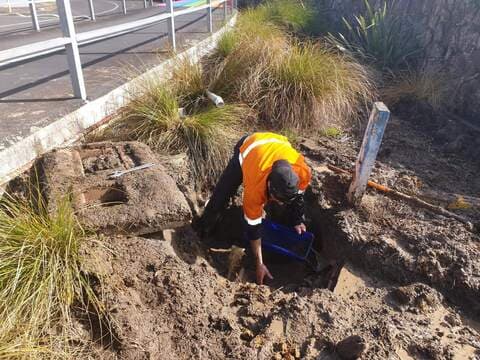
Campus Leak Detection & Repair
After suffering long-term issues with water loss, system configuration and location, Utility Works was engaged to find and repair the leaks at a West Auckland campus. The site spanned over 150 acres with extensive buildings and intertwining historic and modern piping networks. The project involved extensive system isolation and configuration testing, GPR and pipe tracing, re-mapping and full leak detection surveying. Once the losses were located, over 14 underground leaks were excavated and repaired. From initial engagement to completion of the first stage of repairs, the campus saw an 83% reduction in minimum night-flow loss.
Read the case study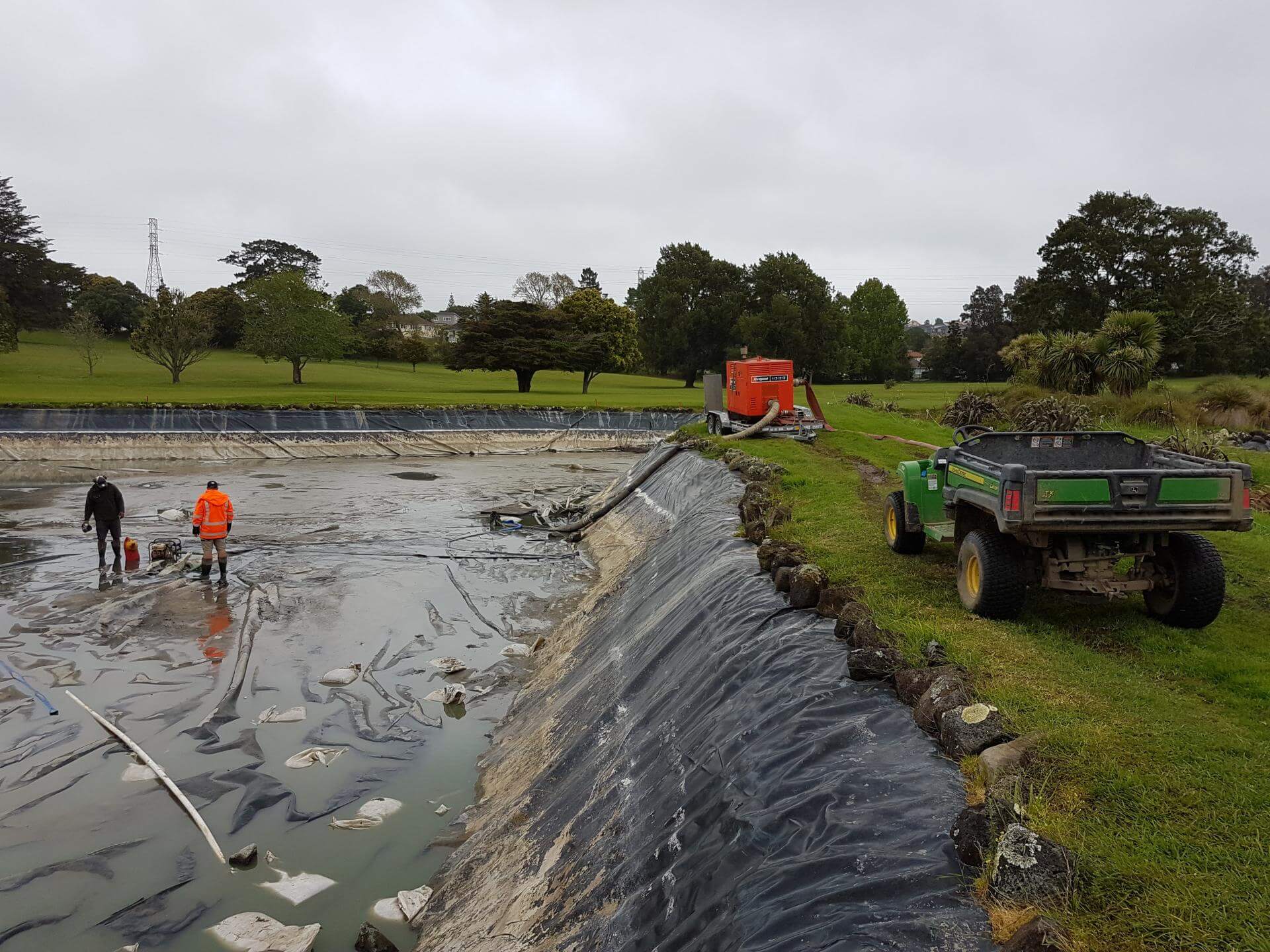
Auckland
Golf Course Pond Leak Detection in Auckland
Lined ponds pose many challenges once underground loss occurs. Utility Works was contracted to assist with the locating of pond leaks at a large Auckland golf course ahead of the dry summer months, when the irrigation system relied on the water supply. The process involved underwater diving and installation of pipe air bags to block the balance pipe and separate the two ponds, enabling accurate loss calculation, followed by GPR and IR works to determine likely areas of loss. The ponds were pumped out to enable locating of the defects for repair. We also assisted with the irrigation flow and isolation testing during the process.
Read the case studyWest Auckland: your questions
Who fixes a burst water main in West Auckland, Watercare or the owner?
Do you repair water mains in Henderson and Te Atatū, or only find the leak?
Can you locate plastic water and gas pipes in Hobsonville Point and Whenuapai before we dig?
Will a beforeUdig request cover my section in Massey or Glen Eden?
Do you cover Titirangi, Swanson and Kumeū, and does the drive change the job?
Ready when you are.
Tell us what you’re seeing or what you’re planning. You’ll get a straight answer, a free quote and one crew that does the whole job.
Mon–Fri 7am–5pm · Waiau Pa, South Auckland · Auckland, Franklin & North Waikato