
Leak Detection in Paeroa
Local leak detection for Paeroa and the wider Thames & Hauraki area
Since 2015Own locators, hydro-vac & diggersAuckland · Franklin · North Waikato
Leak detection and service detection jobs can start from $300 +GST. Every job is different, so call 0800 779 588 and we’ll talk through your situation and give you an estimate.
Leak Detection for Paeroa properties, sites and farms
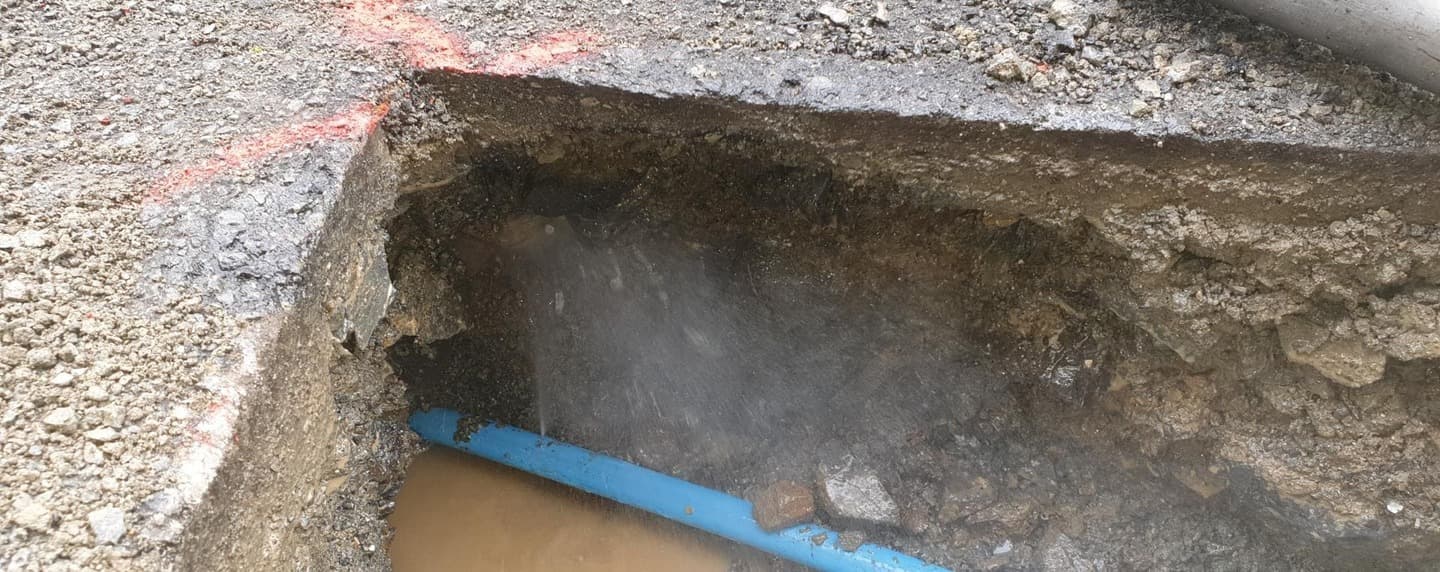
Paeroa's peaty ground does two things to a water leak: it lets the pipe move enough to open a joint, then soaks up the escaping water so the surface stays dry. The result is a leak that shows up on the Hauraki District Council meter long before it shows in the lawn. Utility Works brings acoustic detection, correlation and pipe tracing to pinpoint it, then digs and repairs it with our own hydro-vac and excavator, with everything the job needs carried on the one trip from Waiau Pa.
Typical leak detection jobs in Paeroa
- Locating joint failures on older galvanised and asbestos-cement house connections in town
- Tracing leaks on long dairy-farm water runs across the plains around Paeroa
- Loss testing and repair on school, commercial and community supplies in the town centre
Leak Detection, in short
Water from a broken pipe rarely surfaces where the break is. We find the exact spot with acoustic listening gear, leak correlators, pipe tracing and, where it helps, ground penetrating radar and thermal imaging, so the dig is small and in the right place. Then the same crew excavates with our own digger or hydro-vac truck, repairs the pipe and reinstates the lawn, driveway or concrete. We work on everything from a single house connection to retirement villages, schools, farms and industrial sites, and we test afterwards so you can see the loss has stopped.
Full details: Underground Leak Detection & Repair →Working underground in Paeroa
Paeroa sits on the Hauraki Plains where the Ohinemuri River meets the Waihou, a short distance inland from the Firth of Thames. It is an older town with established streets, a compact commercial centre and housing that mostly pre-dates modern plastic pipework, which means galvanised and asbestos-cement lines are still common under the sections.
The ground here is peaty and alluvial, soft and wet for much of the year. Pipes laid in it settle and shift, joints open up and leaks can travel some distance through the saturated soil before showing on the surface. The rivers are held in by flood-scheme stopbanks, and the water table is rarely far below the grass.
Hauraki District Council runs the town's water and wastewater. Beyond the town, dairy farms spread across the plains on long private water runs fed from bores and the council's rural supply, and those lines are a regular source of leak and locating work for us whenever we are through on a Hauraki trip.
When Paeroa’s homes were built, and what that means for leaks
The age of a house tells us what pipe and cable to expect underneath it before we arrive.
Before 1960
Paeroa grew as the river port and railhead for the Karangahake and Waihi goldfields: the rush began in 1875, the railway arrived in 1881 and the Waihou was navigable to the town until 1928. The Towers Street and Hill Street area was subdivided in the 1910s, the town kept growing through the 1930s, and streets such as Claremont Avenue were formed around 1920 but mostly built on after 1945.
1960s to 1980s
The pre-war subdivisions kept filling in through the 1960s, so copper-era homes sit among older villas on the same streets.
1985 to 2000
Very little. Paeroa lost people between 2006 and 2013, and housing from these years is scarce.
Since 2000
Growth returned: 4,458 people in 2023, up 17 per cent on 2013, in about 1,800 dwellings with a median age of 51 against a national 38. Most of it is infill and small new stages rather than a new suburb.
What Paeroa’s water pipes are made of, and how they fail
Paeroa's housing is mostly pre-1970, so galvanised laterals and asbestos-cement mains dominate, with lead-jointed cast iron under the oldest streets near the Ohinemuri. In peat and soft alluvium that matters more than elsewhere: the ground settles, the pipe does not, and galvanised threads and AC joints are the first things to give. The water then drains into saturated ground, the lawn stays dry and the Hauraki District Council meter, read every six months, quietly climbs.
Copper from the 1960s does better, but its fittings corrode in wet peat. The small amount of post-2013 building is on MDPE, often cut into those old AC mains, and new plastic carries no dependable tracer wire. For locating, Paeroa's old metal pipe traces well from the toby but sits at odd depths where the ground has dropped around it, so the depth on a plan is rarely the depth in the ground, and we pothole with hydro-vac rather than trust it.
Why leaks are hard to find in Paeroa’s peat and alluvium
Paeroa sits on the eastern edge of the Hauraki Plains, about 15 metres above sea level, where the Ohinemuri meets the Waihou. The plains are a down-dropped block of crust filled with river alluvium and, before drainage, raw peat from a metre to more than 20 metres deep. Drained peat keeps subsiding, up to 2 centimetres a year, so the ground under older pipes has dropped and goes on dropping. The water table sits close to the surface for much of the year, which is why a leak soaks away instead of pooling, and why trenches need pumping.
The rivers are held by the Waihou Valley scheme, 120 kilometres of stopbanks built between 1972 and 1997 after the 1981 flood put Paeroa under water, with floodgates at the Criterion Bridge that were shut for the first time at 1am on 14 February 2023 as the Ohinemuri reached the height of the main street. Spoil from two hillocks removed on Normanby Road went into the early stopbanks. Wet peat and silt absorb radar quickly, so GPR depth is limited on the flat, while the hill ground east of town reads better.
Who owns the pipes in Paeroa
Which network a service belongs to decides who fixes it, who you call first and whose plans a beforeUdig request returns.
Water supply
Hauraki District Council runs Paeroa's water until 1 July 2027, when drinking water and wastewater transfer to Waikato Waters, the company six Waikato councils set up in July 2026. Every property is metered, with the meter in a blue box near the road boundary. The council's rule is plain: a leak between the meter and the house is yours to repair, and a leak on the road side or in the meter box is theirs.
Wastewater
HDC runs the town sewer until mid-2027. The dairy farms on the plains around Paeroa are on septic tanks and effluent systems.
Electricity
Powerco's Waikino network area takes in Paeroa, Waihi and Whangamatā.
Gas
We have not found a reticulated natural gas network in Paeroa; gas here is bottled LPG, so a gas main on a plan is something to query with Firstgas before anyone digs.
Fibre and phone
Chorus built Paeroa's fibre under the UFB programme and owns the copper.
beforeUdig plans
A beforeUdig request returns Hauraki District Council water, wastewater and drainage plans, Powerco and Chorus. Private laterals, farm water runs and the old land drains the town is built around are not on them.
One crew for Paeroa: find it, dig it, fix it.
Paeroa is about 85 minutes from Waiau Pa by way of Pōkeno and the Hauraki Plains, so we quote it as a full day's work, and travel is a small part of the cost on a job of any size.
Get a free quoteNeed leak detection in Paeroa? Call us for a free, no-obligation quote.
Free, no-obligation quote · Mon–Fri 7am–5pm · Auckland, Franklin & North Waikato
Google reviews
What customers say
“Prompt service & fair pricing. Tony and his team — sharp eye for detail and out of the box problem solving paired with a high standard of workmanship.”
Richard La Trobe · Google · October 2026
“Really happy with the work to install our underground services. Highly recommend.”
Sarah Walworth · Google · October 2026
“The only company we trust… reliable, cost effective, and honest service from A to Z. 100% confidence in this company.”
Darrel Assink · Google · September 2026
Our Projects
1–2 of 4
South Auckland
Retirement Village Water Leak Detection & Repair
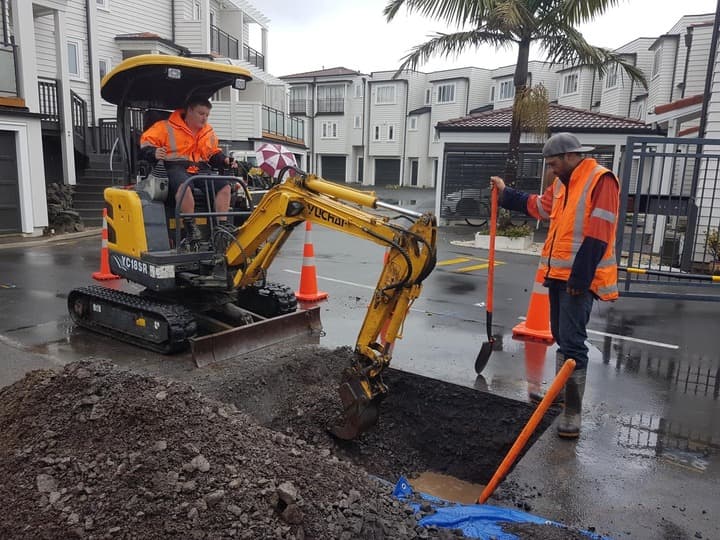
A large retirement village of 58 units in South Auckland had been experiencing underground water loss. Utility Works conducted system loss testing, system mapping, mark-out and CCTV/sonde pinpointing of joint and tapping band positions, isolation point installation, followed by acoustic and infrared detection works. Once leak positions were located, we implemented strategic excavation and pipe repairs, followed by ground reinstatement and site clean-up. This successful project resulted in the accurate locating and repair of five leak positions, and provided substantial water savings to the client.
Read the case study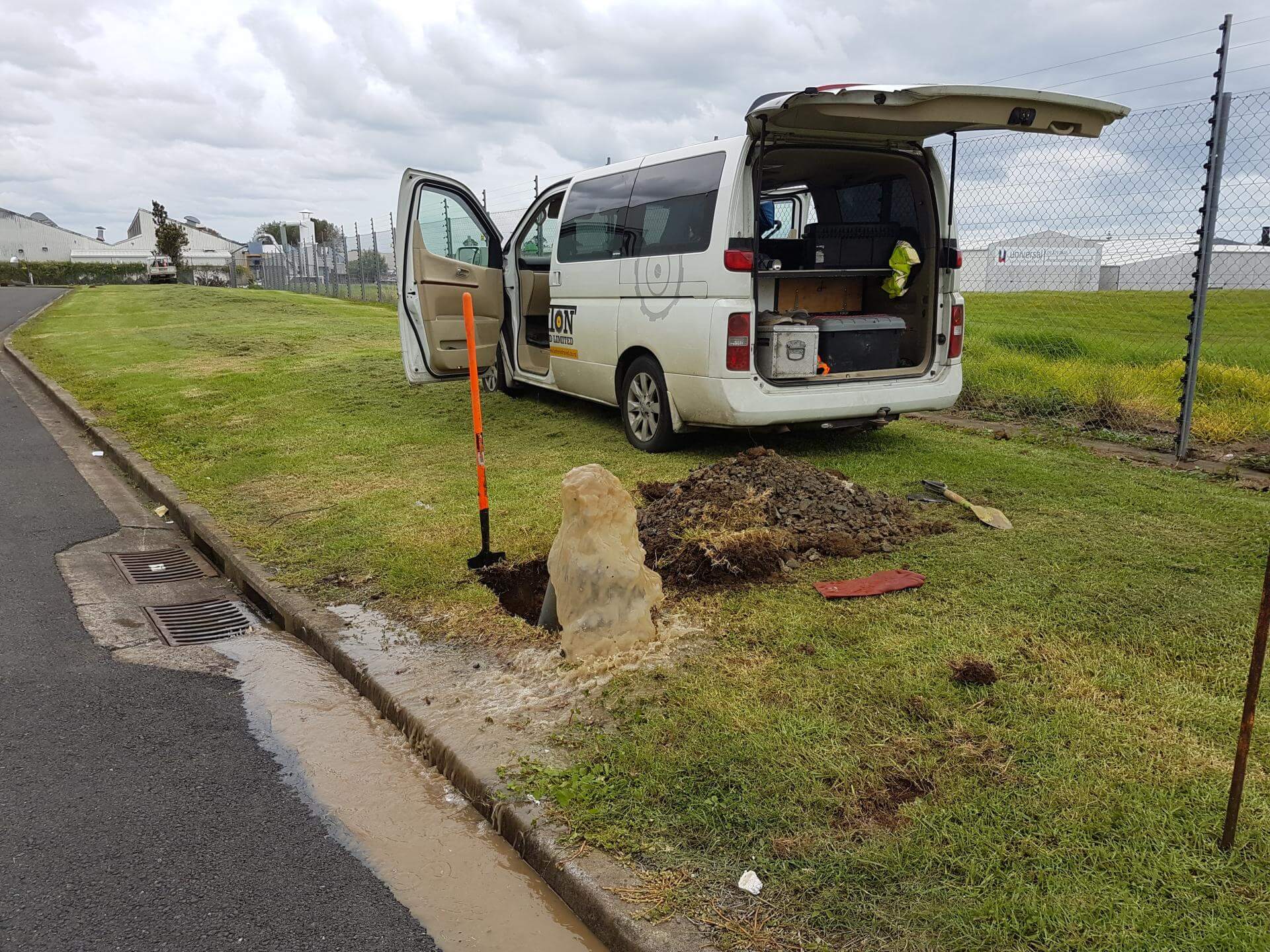
East Tāmaki, Auckland
Industrial Property Water Loss Investigation
A large, 14-hectare industrial property in East Tāmaki was experiencing a high-volume water-loss issue. The busy site was losing in excess of 170 L/min and substantial works had already been undertaken to attempt locating the leak before Utility Works was engaged. We undertook a strategic approach to the investigation including a full site audit and partial mapping of the 180mm mains and isolation testing, followed by IR, GPR, and acoustic works which enabled us to pinpoint the leak, have the position excavated, and the leak repaired overnight.
Read the case studyLeak Detection nearby
Other services in Paeroa
Leak Detection in Paeroa: your questions
Who fixes a leak between the water meter and my house in Paeroa?
My Paeroa water bill jumped but the lawn is dry. Where is the water going?
Will the change to Waikato Waters in 2027 change who I call about a leak in Paeroa?
Can you find a leak on a farm water line on the plains near Paeroa?
Ready when you are.
Tell us what you’re seeing or what you’re planning. You’ll get a straight answer, a free quote and one crew that does the whole job.
Mon–Fri 7am–5pm · Waiau Pa, South Auckland · Auckland, Franklin & North Waikato