
Articles & Advice · 2 October 2025
How Water Mains Installation Works for Residential & Commercial Projects
Whether you're connecting a new home to the public water supply, upgrading an ageing pipe network, or managing infrastructure for a commercial development, water mains installation is a specialist job that requires careful planning, the right materials, and experienced professionals.
Whether you're connecting a new home to the public water supply, upgrading an ageing pipe network, or managing infrastructure for a commercial development, water mains installation is a specialist job that requires careful planning, the right materials, and experienced professionals. Done well, it provides reliable water service for decades. Done poorly, it leads to leaks, pressure problems, and costly repairs.
At Utility Works, we manage water mains installation projects across residential, commercial, and large-scale infrastructure sites throughout Auckland, Franklin, and North Waikato. This guide covers everything you need to know — from preparing your property and choosing the right pipe materials, to how the installation process works and how to keep your system performing long term.
Preparing for Water Mains Installation: What Property Owners Should Do First
Good preparation before installation begins reduces the risk of delays, cost overruns, and unexpected complications. Here’s what you should do before works start on your property.
Conduct a Site Assessment
Before any installation begins, carry out a thorough assessment of your property. This should include:
- Identifying the location of existing underground services — power, gas, telecommunications, and stormwater — to avoid conflicts with new pipework
- Reviewing your site plans to confirm pipe routing options and any constraints
- Noting the type of ground conditions (rock, clay, fill) that could affect excavation method and cost
- Assessing access routes for excavation equipment and material delivery
Obtain the Necessary Permits and Approvals
Water mains installation typically requires council and/or Watercare approval before work can begin. Requirements vary depending on the type of connection, property type, and whether the work affects public infrastructure. Your contractor can help identify what approvals are needed and assist with the application process. Starting work without the right permits can result in work being stopped, fines, or the need to redo work at your own cost.
Prepare the Site
Once approvals are in place, you can prepare the physical site:
- Clear the work zone of vegetation, vehicles, and other obstacles that could impede access
- Mark out the proposed pipe route, noting any sensitive areas such as established trees, garden features, or structures
- Arrange for temporary water supply if the existing supply will be interrupted during installation
- Coordinate access with any tenants, businesses, or neighbours who may be affected during the work period
The better prepared your site is before the crew arrives, the more efficiently the installation can proceed - which directly affects your overall project cost.
Choosing the Right Pipe Materials
The materials used in your water mains installation have a direct impact on performance, longevity, and cost. There’s no single “best” pipe material — the right choice depends on your specific site conditions, water pressure requirements, installation method, and budget. Here’s a comparison of the most commonly used materials:
Material | Key Strengths | Limitations | Best For |
PVC | Lightweight, affordable, corrosion-resistant | Not ideal under very high pressure | Residential, low-pressure mains |
Ductile Iron | High strength, handles high pressure well | Corrosion risk if uncoated; heavier to handle | Commercial & industrial mains |
HDPE | Flexible, chemical & corrosion resistant, long life | Higher upfront cost than PVC | Rural, industrial, trenchless installs |
Copper | Durable, naturally bacteria-resistant | High cost; requires skilled installation | Sensitive applications, older retic systems |
Concrete | Very durable under high load, long service life | Heavy; specialist installation required | Large-diameter trunk mains |
Key Material Selection Criteria
When advising on material selection, Utility Works considers the following factors:
- Environmental conditions — soil chemistry, ground movement risk, and exposure to chemicals all affect which materials will perform best and last longest
- System pressure requirements — high-pressure commercial and industrial systems need materials rated for the operating conditions
- Ease and method of installation — trenchless installation methods (pipe bursting, directional drilling) require flexible, weld-compatible materials such as HDPE
- Cost over time — a less expensive material with a shorter service life or higher maintenance burden may cost more in the long run than a premium option installed correctly from the start
Our team will recommend the most appropriate material for your project based on your site conditions and the expected service life of the system - not just the lowest upfront cost.
Residential Water Mains Installation
Residential water mains work covers a broad range of project types, each with its own requirements and considerations.
New Builds
For new residential construction, we manage the full water connection from the boundary toby (tap) through to the dwelling. This includes trenching, pipe laying, meter installation, and pressure testing to council and Watercare requirements — ensuring your new home is connected correctly and compliantly from day one.
Subdivisions
Subdivision projects require the design and installation of reticulation networks that distribute water to multiple lots. We work with developers and civil engineers to ensure water infrastructure is correctly sized, installed to spec, and handed over to the relevant authority in a compliant condition.
Pipe Replacements
Older properties often have ageing lead, galvanised, or asbestos cement pipes that need replacement. We assess the existing system, recommend the right replacement material, and carry out the works with minimal disruption to your household — including temporary supply arrangements if needed.
Lifestyle Blocks
Lifestyle and rural residential properties often require longer pipe runs, pressure pumps, and UV or filtration treatment systems. We design and install water supply systems tailored to the unique demands of rural residential sites, including integration with tank supply or bore water sources.
Commercial & Infrastructure Water Mains Projects
Commercial and infrastructure water mains projects are typically more complex in scope, often involving larger-diameter pipes, higher operating pressures, and the coordination of multiple contractors and authorities. Utility Works has experience delivering:
- Commercial building connections — new connections and upgrades for office buildings, retail centres, warehouses, and industrial facilities
- Industrial water supply — high-volume, high-pressure water mains for process water, fire suppression systems, and cooling infrastructure
- Council and infrastructure contracts — installation and renewal of public water mains on behalf of councils and infrastructure authorities
- Large-scale developments — water reticulation design and installation for business parks, industrial estates, and master-planned residential communities
Our teams are experienced in working within live environments — minimising disruption to existing services and neighbouring properties throughout the installation process.
Our Water Mains Installation Process
Every water mains installation project we undertake follows a structured process designed to deliver quality outcomes with minimal disruption.
- Site Assessment & Design — We assess your site, review existing records, and design the installation to meet your water supply requirements and relevant standards. This includes identifying the preferred pipe route, material specification, and any trenchless options where open excavation is impractical.
- Consents & Approvals — We manage the consenting and approval process with your local council and/or Watercare, ensuring all necessary permits are in place before work begins.
- Underground Service Location — Before breaking ground, we use specialist locating equipment to identify and mark all existing underground services. This critical step prevents accidental damage to power, gas, telecommunications, or other buried infrastructure during excavation.
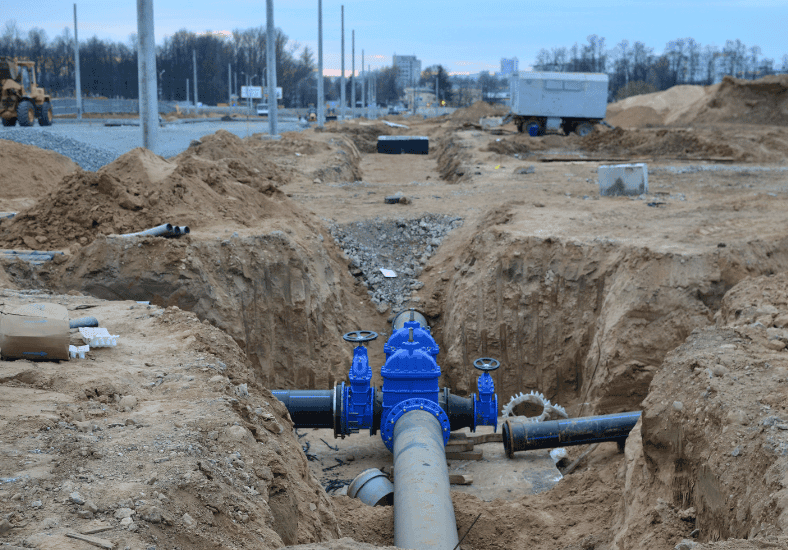
- Excavation & Installation — We excavate along the agreed route, install the new main to specification, and make the necessary connections at both ends. Where trenchless methods are appropriate, we use pipe bursting or directional drilling to minimise surface disruption.
- Pressure Testing & Commissioning — Before backfilling and reinstatement, we pressure test the new main to the required standard, confirming the installation is leak-free and fit for service.
- Reinstatement — We restore the affected area to its original condition — whether that’s footpath, driveway, lawn, or carriageway — leaving your site clean, level, and safe.
Long-Term Maintenance: Protecting Your Investment
A well-installed water main should deliver reliable service for decades — but only if it’s maintained appropriately. Building a maintenance programme into your plans from the start is one of the most cost-effective things a property or facilities manager can do.
Establish Regular Inspection Schedules
For commercial, industrial, and multi-tenancy properties, set up a routine inspection programme for your water system. Regular checks allow you to identify potential weaknesses — corrosion, joint movement, pressure irregularities — before they become significant failures. The frequency of inspections will depend on the age of the system, water quality, and site conditions.
Know the Early Warning Signs
Train your facilities management team or key staff to recognise the early indicators of a developing problem:
- Unexplained increases in water consumption or bills
- Reduced pressure at outlets or irrigation systems
- Wet patches, soft ground, or pooling water that doesn’t correspond to rainfall
- Discolouration or reduced water quality at taps
- The sound of running water when all outlets are closed
Catching issues early means faster, less disruptive, and less costly repairs. Left unchecked, a slow underground leak can erode surrounding soil, destabilise foundations, and lead to significantly more expensive remediation work.
Keep Records Up to Date
Maintain accurate as-built records of your water mains installation, including pipe routes, material specifications, valve locations, and pressure test results. Good documentation speeds up fault-finding, supports future maintenance decisions, and is essential if you plan to extend or modify the system later.
Choosing the Right Water Mains Contractor
Water mains installation isn’t work you want to cut corners on. Selecting the right contractor makes a significant difference to the quality, longevity, and compliance of your installation. Look for:
- Demonstrated experience with projects of similar scale and complexity to yours
- Familiarity with local council and Watercare requirements — a contractor who knows the process will save you time and avoid costly rework
- Capacity to manage the full scope — from consenting and service location through to installation, testing, and reinstatement
- A clear, written quote that sets out exactly what is and isn’t included
- References or a proven track record of completed projects in your area
At Utility Works, we handle every stage of your water mains installation in-house — from the initial site assessment and consent application through to pressure testing and full reinstatement. You won’t need to coordinate multiple subcontractors or chase progress updates from different parties.
Ready to Start Your Water Mains Project?
Whether you’re planning a new residential connection, a commercial upgrade, or a large-scale infrastructure project, Utility Works provides expert water mains installation services across Auckland, Franklin, and North Waikato. Contact us today to discuss your project and get a detailed quote.
FAQs
How long does water mains installation take?
The timeframe varies depending on the scale and complexity of the project. A straightforward residential connection typically takes one to two days. Larger commercial or subdivision projects can take several weeks. We’ll provide you with a realistic programme at the quoting stage so you can plan accordingly.
Will my water supply be interrupted during installation?
For projects that require connection to or modification of an existing main, there will usually be a planned shutdown period — typically a few hours. We schedule shutdowns to minimise disruption and provide advance notice. Temporary supply arrangements can be made where extended interruption is anticipated.
Do I need council approval before water mains work can begin?
In most cases, yes. New connections and modifications to water infrastructure require approval from your local council and/or Watercare. The specific requirements depend on the type and scale of work. We manage the consenting process on your behalf to make sure everything is in order before work starts.
What pipe material is best for my property?
It depends on your site conditions, pressure requirements, installation method, and budget. HDPE is increasingly the preferred choice for residential and rural installations due to its flexibility, long service life, and resistance to corrosion. For high-pressure commercial systems, ductile iron or HDPE are typically the materials of choice. We’ll recommend the most appropriate option after assessing your site.
How do I know if my existing water mains need replacing?
Common indicators include persistent low water pressure, discoloured water, unexplained increases in your water bill, or visible corrosion on exposed pipework. Many older properties in New Zealand still have original lead, galvanised, or asbestos cement pipes — if your property is pre-1980s and hasn’t had its water mains replaced, it’s worth having them assessed. Contact Utility Works for an inspection.
Let's discuss your underground project needs. Contact us today for a free, no-obligation quote.
Free, no-obligation quote · Mon–Fri 7am–5pm · Auckland, Franklin & North Waikato