
Articles & Advice · 6 August 2026
Underground Power Cable Installation in Pukekohe & Franklin: What Property Owners Need to Know
Underground power cable installation is one of the most common questions we get from property owners across Pukekohe and Franklin — usually alongside one specific question: what's this actually going to cost?
Underground power cable installation is one of the most common questions we get from property owners across Pukekohe and Franklin — usually alongside one specific question: what's this actually going to cost? The honest answer is that it depends on several factors specific to your site, but understanding what drives that cost puts you in a much stronger position when you start getting quotes.
At Utility Works, we install underground power cables for homeowners, lifestyle block owners, and rural properties throughout Franklin and North Waikato. This guide breaks down what's involved, what affects pricing, and what to expect from the process.
What Does Underground Power Cable Installation Involve?
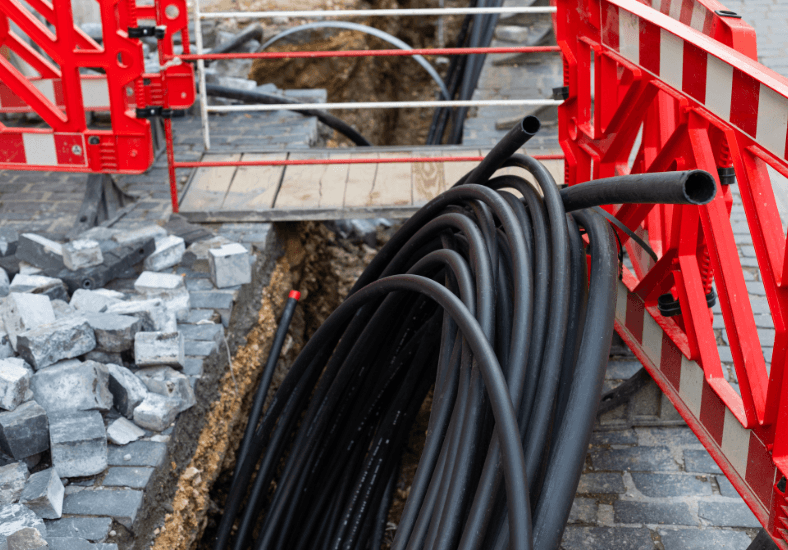
Underground power cable installation means running electrical cable below ground, rather than overhead, from a connection point to your property, shed, sleepout, or new building. This is common for:
- New builds requiring a fresh power connection
- Sheds and sleepouts that need power run to a separate structure
- Overhead to underground conversions, where existing overhead lines are relocated underground
- Rural and lifestyle blocks connecting power over longer distances
The process generally involves trenching or thrusting a path for the cable, laying ducting to protect it, running the cable through, and connecting it at both ends in line with lines company requirements.
What Affects the Cost of Underground Power Cable Installation?
There's no single figure that applies to every property, because cost is driven by site-specific factors. The main ones we consider include:
- Distance – how far the cable needs to run from the connection point to your building
- Ground conditions – rocky, clay-heavy, or difficult ground takes longer to trench than clear, easy-digging soil
- Installation method – open trenching versus thrusting (a trenchless method used under driveways, gardens, or other areas you don't want to dig up)
- Cable capacity required – a small shed connection is a very different job to a full new-build supply
- Lines company requirements – some connections require additional approvals or infrastructure upgrades
- Reinstatement – how much landscaping, driveway, or surface repair is needed once the cable is in
Because of this, getting an accurate cost means having your site assessed rather than relying on a generic estimate. We're happy to walk any Pukekohe or Franklin property owner through this during a site visit.
Trenching vs Thrusting: What's the Difference?
Two of the most common installation methods are trenching and thrusting, and the right choice depends on your site.
Trenching involves digging an open trench along the cable route. It's typically faster and more cost-effective where the ground is easy to work and reinstatement (like re-laying lawn) is straightforward.
Thrusting is a trenchless method that pushes a bore underground, avoiding the need to dig up the surface entirely. This is often the better option under existing driveways, established gardens, or areas where surface disruption needs to be minimised.
Our team assesses your site and recommends the method that balances cost, timeframe, and disruption for your specific situation.
Compliance With Lines Companies
Underground power cable installation isn't just a digging job — it needs to meet the requirements of your local electricity distribution business (lines company). This typically includes:
- Design approval before work begins
- Compliant materials and depth for the cable and ducting
- Inspection and sign-off once the connection is complete
- As-built documentation for the property's records
Skipping or rushing this process can result in a failed inspection, requiring rework, which ends up costing more time and money than getting it right the first time.
What to Expect: Typical Project Timeline
While every project differs, a typical underground power cable installation for a residential or lifestyle property generally follows this sequence:
- Site assessment to confirm ground conditions, distance, and method
- Design and lines company approval, where required
- Installation via trenching or thrusting
- Cable connection at both ends
- Testing and compliance sign-off
- Reinstatement of the site, where applicable
For straightforward residential connections, this process can often be completed within a matter of weeks from initial assessment to sign-off, though larger rural properties with longer cable runs may take longer.
Underground Power for Rural Properties
Rural and lifestyle properties in Franklin and North Waikato often face longer cable runs and more varied ground conditions than urban sections. Rural power installation frequently involves:
- Longer trenching or thrusting distances across paddocks or driveways
- Coordination with lines companies for rural-specific infrastructure
- Careful planning around existing farm infrastructure, fencing, and access
Because rural jobs tend to have more variables, an on-site assessment is especially important for getting an accurate picture of cost and timeframe.
Get an Accurate Assessment for Your Property
Cost estimates for underground power cable installation vary too much between properties to rely on a generic figure — but a site visit gives you clarity fast, along with a realistic timeline for your project.
If you're in Auckland, Franklin, or anywhere across North Waikato and need underground power cable work assessed, get in touch with the Utility Works team.
Frequently Asked Questions
What does underground power cable installation cost in Auckland?
Cost depends on factors like cable distance, ground conditions, installation method (trenching vs thrusting), and reinstatement requirements. A site assessment gives the most accurate picture, since generic estimates rarely reflect real project conditions.
What's the difference between trenching and thrusting for power cables?
Trenching involves digging an open trench along the cable route, while thrusting is a trenchless method that bores underground without disturbing the surface. Thrusting is often used under driveways or established gardens to avoid reinstatement work.
Do I need lines company approval for underground power cable installation?
Yes. Underground power connections need to meet your local electricity distribution business's design, materials, and inspection requirements, with sign-off required before the connection is considered compliant.
How long does underground power cable installation take?
Straightforward residential connections can often be completed within a few weeks from assessment to sign-off, while longer rural runs or more complex sites may take additional time.
Is rural power installation more expensive than urban installation?
It can be, mainly due to longer cable runs and more variable ground conditions on rural and lifestyle properties. An on-site assessment is the best way to understand the specific requirements and cost drivers for a rural property.
Let's discuss your underground project needs. Contact us today for a free, no-obligation quote.
Free, no-obligation quote · Mon–Fri 7am–5pm · Auckland, Franklin & North Waikato