
Articles & Advice · 10 September 2026
What Is Hydro Vac Potholing? The Safest Way to Expose Underground Services Before You Dig
Confirming where an underground service actually sits is one thing.
Confirming where an underground service actually sits is one thing. Physically exposing it to verify that location, without damaging it in the process, is another challenge entirely. That's exactly what hydro vac potholing is designed to do — expose buried infrastructure safely, so contractors can see exactly what they're working around before mechanical digging begins.
At Utility Works, hydro vac potholing is a key part of how we support safe excavation across Auckland, Franklin, and North Waikato. This guide explains what it is, how it works, and when it's needed.
What Is Hydro Vac Potholing?
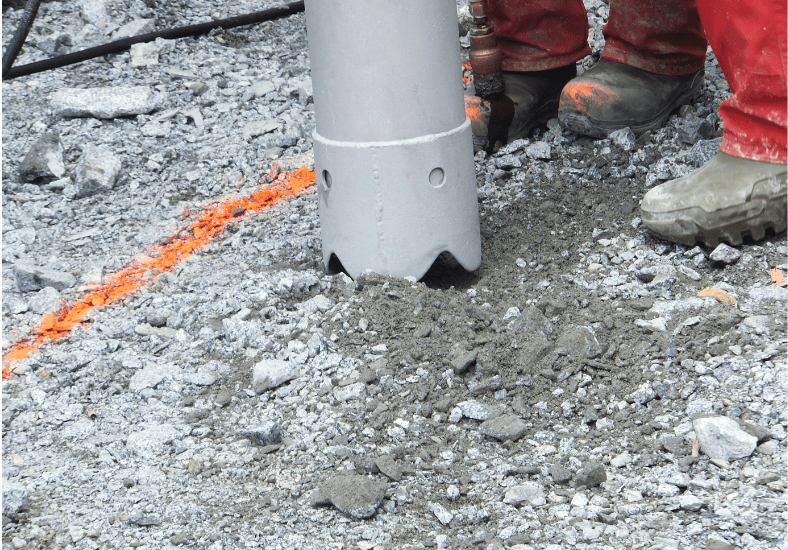
Hydro vac potholing, also known as vacuum excavation, is a non-destructive excavation method that uses pressurised water to break up soil, combined with a powerful vacuum to remove the resulting slurry. The result is a small, precisely controlled hole that exposes underground services without the risk that comes with mechanical digging equipment.
It's called "potholing" because the excavations created are typically small, targeted holes, exposing a specific section of pipe or cable rather than an entire trench.
How Does Hydro Vac Potholing Work?
The process is straightforward in principle, but requires the right equipment and trained operators to execute safely:
- Marking the target location, based on prior detection work such as ground penetrating radar or cable locating
- Applying pressurised water to break up the soil at the marked point
- Vacuuming the resulting slurry into a holding tank on the hydro vac unit
- Exposing the service, allowing visual confirmation of its exact position and depth
- Assessing the site, before any further excavation or repair work proceeds
Because the excavation is created by water pressure rather than a mechanical blade or bucket, there's significantly less risk of striking and damaging the service being exposed.
Why Hydro Vac Potholing Is Safer Than Mechanical Digging
Traditional digging methods, whether by hand or machine, carry an inherent risk near underground services: a shovel or digger bucket doesn't know the difference between soil and a live cable until it's too late. Hydro vac potholing removes much of that risk because:
- Pressurised water doesn't damage pipes or cables the way a metal digging tool can
- Excavation stops at the point of resistance, rather than continuing through an obstruction
- Operators can see the service exposed in real time, rather than working blind
- The excavation footprint is small, minimising disruption to the surrounding area
This makes it the preferred method whenever excavation needs to happen close to known or suspected underground infrastructure.
When Is Hydro Vac Potholing Required?
Hydro vac potholing is commonly used in situations including:
- Verifying the exact position of a service identified during a pre-dig services check, before further excavation
- Exposing services near new utility connections, such as new build power or water connections
- Confirming pipe or cable depth and condition before repair work begins
- Working in congested areas where multiple services run close together
- Any excavation near critical infrastructure, where the consequences of a strike would be significant
For many civil and utility projects, hydro vac potholing has become a standard step rather than an optional extra, particularly in built-up areas of Auckland with dense underground infrastructure.
Hydro Vac Potholing vs Traditional Excavation
It's worth understanding where each method fits, since hydro vac potholing isn't a replacement for all excavation — it's a targeted tool for a specific purpose.
Hydro vac potholing is best suited to exposing and verifying underground services with minimal risk, typically as an investigative or precautionary step before further work.
Traditional mechanical excavation remains appropriate for broader trenching and bulk earthworks once service locations have been confirmed and the risk of a strike has been addressed.
Using both methods at the right stage of a project gives contractors the safety benefits of hydro vac potholing without sacrificing the efficiency of mechanical excavation for the bulk of the work.
Supporting a Complete Pre-Dig Process
Hydro vac potholing works best as part of a broader pre-dig process, rather than a standalone step. This typically includes:
- Detection, using ground penetrating radar, cable locators, and utility records
- Marking, confirming likely service locations on site
- Potholing, physically exposing services to verify exact position and depth
- Planning, using the confirmed information to plan safe excavation for the rest of the project
Skipping straight to mechanical digging without this sequence removes the safety margin that detection and potholing are designed to provide.
Who Uses Hydro Vac Potholing?
Hydro vac potholing is relevant across a wide range of projects, including:
- Civil contractors working near existing underground infrastructure
- Utility companies verifying service locations before maintenance or upgrade work
- Developers and builders confirming service positions before new connections
- Any project where excavation is planned in areas with known or suspected buried services
If your project involves ground disturbance anywhere services might be present, hydro vac potholing is worth factoring into the plan.
Excavate With Confidence
Hydro vac potholing takes the guesswork out of what's beneath the surface, giving contractors and project teams a safe, precise way to confirm underground services before excavation proceeds. It's a small investment of time that significantly reduces the risk of a costly and disruptive service strike.
If you've got a project anywhere in Auckland, Franklin, or North Waikato that needs underground services exposed safely, get in touch with the Utility Works team.
Frequently Asked Questions
What is hydro vac potholing?
Hydro vac potholing, or vacuum excavation, is a non-destructive method that uses pressurised water and suction to expose underground services safely, without the risk of damage that comes with mechanical digging.
Is hydro vac potholing the same as regular excavation?
No. Hydro vac potholing is a targeted, investigative method used to expose and verify specific underground services, while traditional mechanical excavation is used for broader trenching once service locations are confirmed.
When is hydro vac potholing required before a dig?
It's commonly used to verify service locations identified during a pre-dig services check, expose services near new utility connections, or confirm pipe and cable depth before repair or excavation work proceeds.
Why is hydro vac potholing safer than mechanical digging near underground services?
Pressurised water doesn't damage pipes or cables the way a mechanical digging tool can, and the process allows operators to visually confirm a service's exact position before further work continues.
Does hydro vac potholing replace the need for a pre-dig services check?
No, they work together. A pre-dig services check identifies likely service locations using detection methods, while hydro vac potholing physically exposes and confirms those services before excavation proceeds.
Let's discuss your underground project needs. Contact us today for a free, no-obligation quote.
Free, no-obligation quote · Mon–Fri 7am–5pm · Auckland, Franklin & North Waikato