
Articles & Advice · 12 March 2026
How Acoustic Leak Detection Works on Plastic vs Metal Pipes
Finding hidden water leaks quickly and accurately is critical to preventing water loss, property damage, and costly repairs.
Finding hidden water leaks quickly and accurately is critical to preventing water loss, property damage, and costly repairs. One of the most effective tools used today is acoustic leak detection - a non-invasive method that allows technicians to locate leaks without unnecessary excavation.
However, not all pipes behave the same way. Detecting leaks in metal pipes differs significantly from detecting leaks in plastic pipes, and understanding this difference helps explain why professional equipment and experience are essential.
At Utility Works, we provide advanced acoustic leak detection services across Auckland, Franklin, and North Waikato, using techniques suited to each pipe material and site condition.
What is Acoustic Leak Detection?
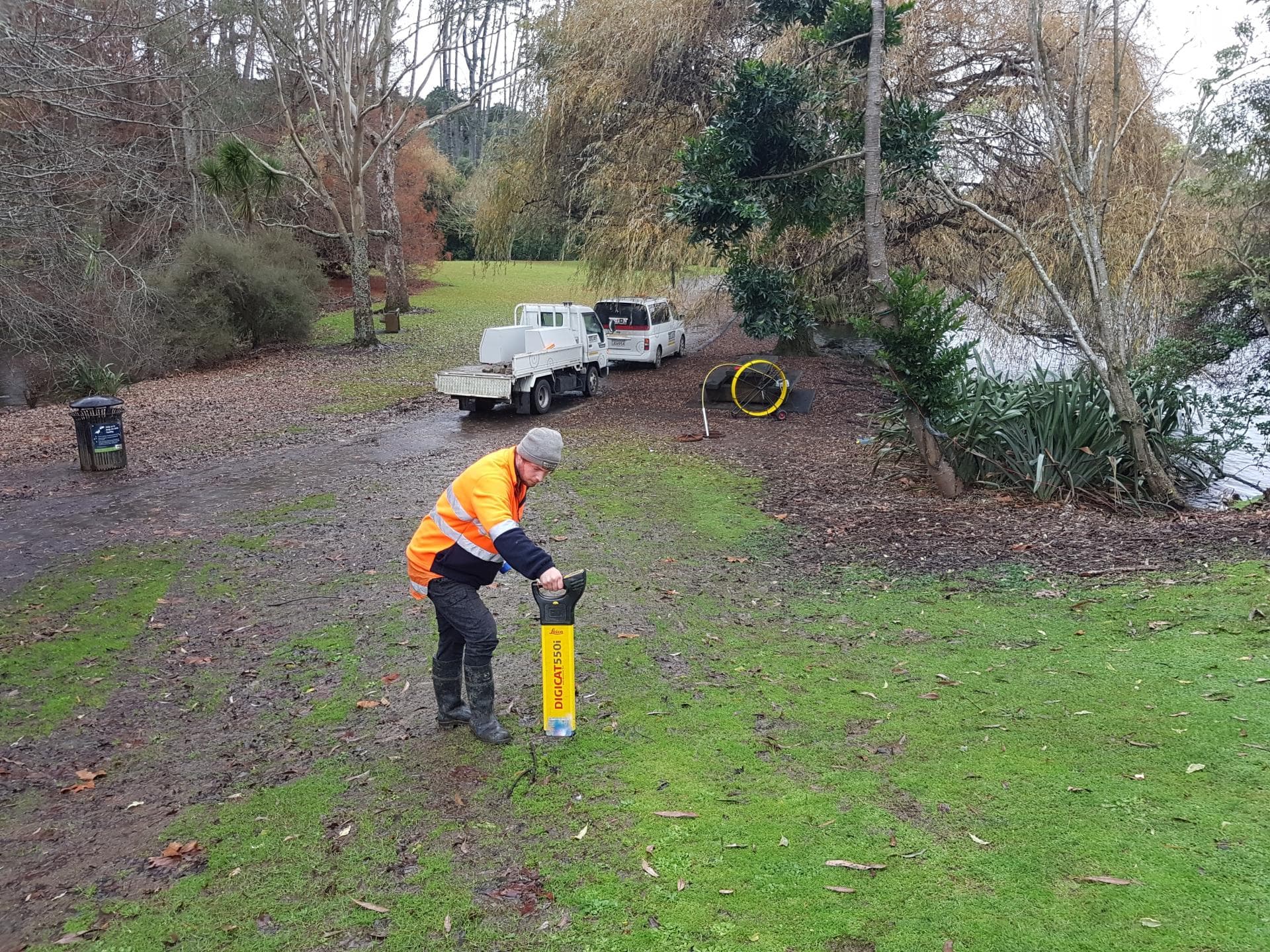
Acoustic leak detection uses sensitive listening equipment to identify the sound created by water escaping from a pressurised pipe. When a leak occurs, it produces vibrations that travel along the pipe and through surrounding materials such as soil or concrete.
Specialised sensors, microphones, and correlators analyse these sounds to pinpoint the leak’s location - often within centimetres.
This method allows leaks to be found:
- Without extensive digging
- Beneath concrete slabs, driveways, and roads
- In both residential and commercial systems
Acoustic Leak Detection on Metal Pipes
Metal pipes (such as copper, steel, or ductile iron) transmit sound very efficiently.
Why metal pipes are easier to detect:
- Sound waves travel long distances along metal
- Leak noise is clearer and more defined
- Equipment can detect leaks from greater distances
This makes acoustic detection highly accurate for metal pipe systems, particularly in older properties or commercial sites.
Acoustic Leak Detection on Plastic Pipes
Plastic pipes such as PVC, PE, or HDPE behave very differently.
Why plastic pipes are more challenging:
- Plastic absorbs sound rather than transmitting it
- Leak noise dissipates quickly
- Background noise can interfere with detection
Because of this, plastic pipe leaks often require more advanced techniques and closer sensory pacing.
Why Pipe Material Matters
The effectiveness of acoustic leak detection depends heavily on how sound travels through the pipe. Different materials transmit sound in different ways, which directly affects detection accuracy.
How Professionals Detect Leaks in Plastic Pipes
Utility Works uses a combination of methods to accurately locate leaks in plastic systems:
- High-sensitivity acoustic sensors designed for low-frequency sounds
- Pipe tracing and isolation to reduce background noise
- Sectional pressure testing to narrow down leak zones
- Ground microphones to detect vibration through soil or concrete
In many cases, combining acoustic detection with pipe tracing and isolation works significantly improves accuracy.
Environmental Factors That Affect Detection
Beyond pipe material, several site conditions influence leak detection success:
- Soil type and moisture content
- Pipe depth
- Surface materials (concrete, asphalt, grass)
- Ambient noise from traffic or machinery
This is why experience and interpretation are just as important as the equipment itself.
Residential vs Commercial Leak Detection
In residential properties, leaks are often located under driveways, lawns, or building slabs, where non-invasive detection is essential.
In commercial and industrial sites, systems are larger and more complex, requiring structured testing and mapping to isolate leaks without interrupting operations.
Utility Works tailors its approach depending on system size, material, and access constraints.
When Acoustic Detection is the Right Solution
Acoustic leak detection is ideal when:
- Water usage has increased unexpectedly
- Pressure has dropped without explanation
- No visible signs of leakage exist
- Leaks are suspected beneath hard surfaces
It is often the first and most effective step in resolving underground water issues.
Why Choose Utility Works for Acoustic Leak Detection
Utility Works combines:
- Advanced acoustic detection equipment
- Skilled technicians experienced with all pipe materials
- Non-invasive methods that minimise disruption
- Fast, accurate results across residential and commercial sites.
We don’t rely on guesswork - we locate leaks precisely and efficiently.
Utility Works also has local experience across Auckland, Franklin, and North Waikato, ensuring the right techniques are applied to your unique site.
Find Leaks Without Unnecessary Digging
If you suspect a hidden water leak, professional acoustic detection can save time, money, and disruption.
Contact Utility Works for expert acoustic leak detection services across Auckland, Franklin, and North Waikato.
We’ll identify the problem accurately and help you resolve it with confidence.
Frequently Asked Questions
Does acoustic leak detection work on plastic pipes?
Yes, but it requires specialised equipment and techniques because plastic absorbs sound more than metal.
Is acoustic leak detection accurate?
When performed by experienced technicians, it can pinpoint leaks very accurately without excavation.
Can leaks be detected under concrete slabs?
Yes. Acoustic detection is commonly used to locate leaks beneath concrete, asphalt, and paved surfaces.
Will leak detection damage my property?
No. Acoustic leak detection is non-invasive and does not require digging to locate the leak.
Should leak detection be done before repairs?
Yes. Accurate detection ensures only the affected area is excavated and repaired, saving time and cost.
Let's discuss your underground project needs. Contact us today for a free, no-obligation quote.
Free, no-obligation quote · Mon–Fri 7am–5pm · Auckland, Franklin & North Waikato