
Articles & Advice · 16 July 2026
New Build Utility Connections in Auckland & Franklin: Your Complete Guide
Building a new home or subdivision means juggling a long list of trades, and utility connections are often the part people understand least.
Building a new home or subdivision means juggling a long list of trades, and utility connections are often the part people understand least. Power, water, gas, and communications all need to go in underground, in the right order, to the right standards, before your build can move forward. Get this stage wrong and you can face costly delays, failed inspections, or expensive rework down the track.
At Utility Works, we connect new builds across Auckland, Franklin, and North Waikato every week. This guide walks you through what new build utility connections actually involve, so you know what to expect and what questions to ask.
What Are New Build Utility Connections?
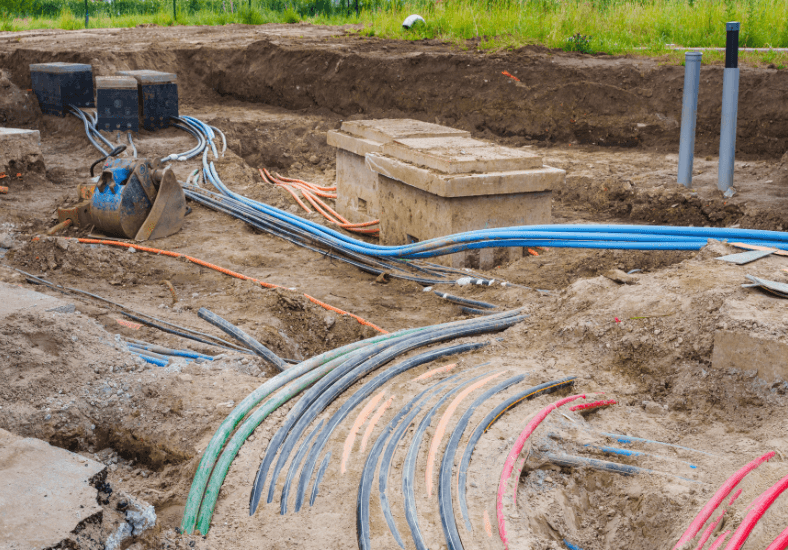
New build utility connections are the underground services that link your property to the wider network — power, water, gas, and telecommunications. For a section that's never been built on, or a subdivision creating multiple new lots, all of these usually need to be installed from scratch.
This typically includes:
- Power – underground electrical cable from the street or transformer to your property boundary and switchboard
- Water – a connection from the water main to your property, sized correctly for household or commercial demand
- Gas – where available, a connection from the local gas network
- Communications – fibre or copper ducting for phone and internet providers
Each of these has its own approval process, its own provider (think Vector, Watercare, or your local lines company), and its own technical requirements.
Why Sequencing Matters
One of the most common mistakes on new builds is getting the order of works wrong. Ducting and pipework need to go in before driveways, landscaping, or final site levels are locked in — otherwise you're digging up finished work to fix an oversight.
A good sequence usually looks like:
- Site investigation to confirm existing services and ground conditions
- Duct and pit installation for power, water, gas, and comms
- Connection applications submitted to the relevant utility providers
- Trenching and cable/pipe laying to each connection point
- Testing and compliance sign-off before backfilling
Getting this right the first time saves both money and stress, particularly on tight subdivision timelines.
Compliance and Approvals
Underground utility installation in New Zealand is governed by strict rules — both for safety and for long-term reliability of the network. Depending on the service, you may need sign-off from your local council, your electricity distribution business, or Watercare (in the Auckland region).
Working with a contractor who understands these requirements from day one means:
- Applications are lodged correctly the first time
- Inspections are booked and passed without delays
- As-built records are provided for your records and future maintenance
This matters just as much for a single new build as it does for a 20-lot subdivision — the paperwork simply scales up.
Why One Contractor for All Connections Makes Sense
It's tempting to bring in separate specialists for power, water, and comms. In practice, this often creates coordination headaches: different contractors on site at different times, duplicated trenching, and nobody taking full ownership if something doesn't line up.
Using a single, experienced contractor for underground utility installation means:
- One point of contact for scheduling and problem-solving
- Coordinated trenching, so pipes and cables share trenches where possible instead of digging the same ground multiple times
- Consistent compliance documentation across every service
- Faster overall timelines, because work isn't waiting on multiple separate providers to show up
For developers managing several lots at once, this coordination can be the difference between a project that runs on schedule and one that stalls waiting on trades.
What This Looks Like for Auckland and Franklin Property Owners
Whether you're building a single home in Pukekohe, developing a small subdivision in South Auckland, or connecting a lifestyle block in Franklin, the fundamentals are the same — but local conditions differ. Ground type, distance to existing infrastructure, and council requirements can all affect cost and timeframes.
Our team works across Auckland, Franklin, and North Waikato regularly, so we understand the specific requirements of local lines companies and councils, and can plan your connections around them from the outset.
Get Your New Build Connections Sorted Early
The best time to think about utility connections is before your new build starts, not once the driveway is poured. Early planning avoids the costly rework that comes from having to dig up finished work.
If you're planning a new build or subdivision in Auckland, Franklin, or North Waikato, get in touch with the Utility Works team for a straightforward assessment of what your site will need — and a clear plan for getting it connected properly, the first time. Learn more about our new build utility installation services here.
Frequently Asked Questions
What underground services need to be connected for a new build?
Most new builds require underground power, water, and communications (phone/internet) connections, and gas where the network is available in your area. Each connects from the street or network infrastructure through to your property boundary and into the house or site.
When should I organise utility connections during my build?
Ideally before groundworks and landscaping begin. Ducting and pipework need to go in early, before driveways, retaining walls, or final site levels are finished, to avoid costly rework later.
Do I need separate contractors for power, water, and comms?
No — many contractors, including Utility Works, can coordinate all your underground utility installation in one process. This reduces duplicate trenching, simplifies scheduling, and keeps compliance documentation consistent across every service.
How long does a new build utility connection take?
Timeframes vary depending on site conditions, the number of connections required, and how quickly utility providers process applications. A single residential connection may take a few weeks from application to completion; larger subdivisions take longer due to multiple lots and approvals.
What happens if utility connections aren't installed correctly?
Incorrect installation can lead to failed compliance inspections, delays to your build, and expensive rework if pipes or cables need to be dug up and redone. Using an experienced underground utility installation contractor from the start helps avoid these issues.
Let's discuss your underground project needs. Contact us today for a free, no-obligation quote.
Free, no-obligation quote · Mon–Fri 7am–5pm · Auckland, Franklin & North Waikato