
Articles & Advice · 22 January 2026
How Underground Utilities are Planned for New Subdivisions in Auckland
Planning underground utilities is one of the most critical stages in any new subdivision project.
Planning underground utilities is one of the most critical stages in any new subdivision project. From power and water to communications and drainage, every service must be carefully coordinated before construction begins. In Auckland, where subdivision activity continues to grow, poor utility planning can lead to delays, compliance issues, and costly rework.
At Utility Works, we work alongside developers, engineers, and project managers to deliver well-coordinated underground utility installation for subdivisions across Auckland, Franklin, and North Waikato. This article explains how underground utilities are planned, what’s involved, and why early coordination is essential.
Why Underground Utility Planning Matters in Subdivisions
Unlike single residential builds, subdivisions involve multiple lots, shared infrastructure, and long-term service performance expectations. Underground utilities must be designed not only for immediate connection, but also for durability, accessibility, and future upgrades.
Effective planning helps to:
- Avoid clashes between services
- Ensure compliance with council and utility provider standards
- Reduce construction delays
- Minimise future maintenance and repair costs
- Support future technologies such as fibre and EV charging
In Auckland, subdivision utility planning must also account for council requirements, site constraints, and existing infrastructure surrounding the development.
Key Underground Services in Subdivision
Most subdivisions require coordinated planning for several underground services, including:
- Power and communications (including fibre-ready ducting)
- Water mains and reticulation systems
- Stormwater and drainage
- Boundary to building connections for each lot
Each service has its own depth, separation, and access requirements. Without proper coordination, these services can interfere with one another or become difficult to maintain after handover.
The Underground Utility Planning Process
1. Early Design and Coordination
Planning begins during the subdivision design phase. Utility corridors are mapped alongside roads, driveways, and lot boundaries. At this stage, coordination between civil engineers, surveyors, and utility installers is essential.
Utility Works assists by reviewing plans and identifying practical installation methods that meet both design intent and real-world site conditions.
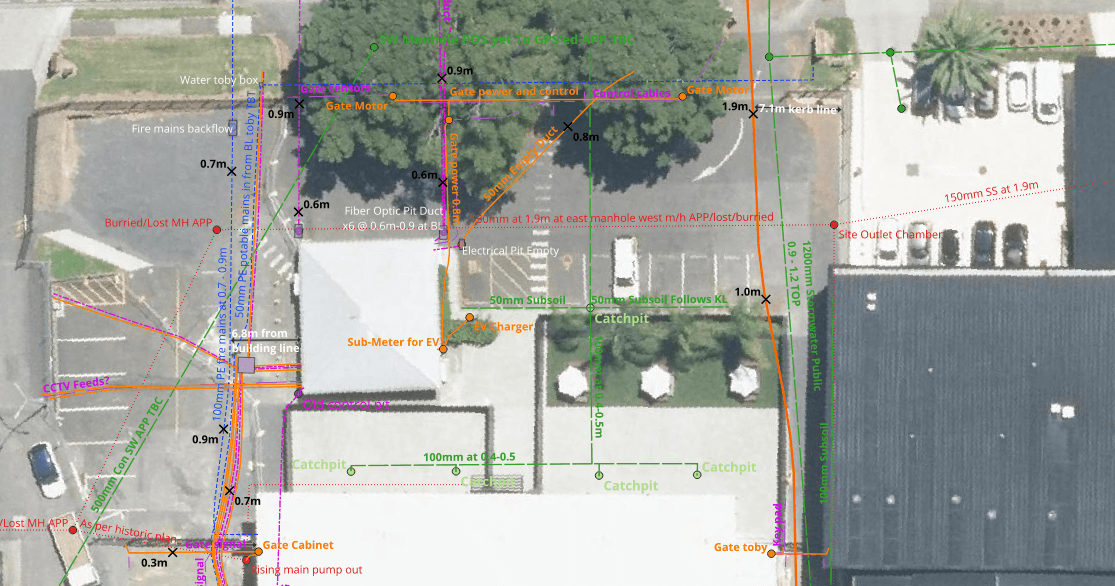
2. Underground Service Detection
Before any excavation begins, existing underground services must be identified. This is particularly important in infill subdivisions or brownfield sites.
Using professional underground service detection and Ground Penetrating Radar (GPR), we locate existing power cables, water pipes, and communication services to avoid damage and redesigns.
3. Duct and Pit Design
Proper duct and pit installation is critical in subdivisions. Ducting protects cables and allows for future upgrades, while pits provide access points for maintenance and connections.
Well-planned ducting ensures:
- Fibre-ready infrastructure
- Safe cable separation
- Easy access for future service upgrades
- Reduced need for future excavation
4. Trenching and Installation Sequencing
Utilities are typically installed in a specific sequence to maintain compliance and efficiency. This may involve shared trenches or staged installations depending on site layout and council requirements.
Utility Works manages underground services installation in a coordinated manner, reducing duplication of trenching and minimising disruption to other trades.
5. Testing, Documentation, and Handover
Once installed, services are tested and verified. As-built documentation is prepared for council sign-off and future reference.
This final stage ensures the subdivision’s infrastructure is compliant, reliable, and ready for individual lot connection.
Auckland-Specific Planning Considerations
Subdivision projects in Auckland often present unique challenges, including:
- Tight urban sites with limited access
- Existing infrastructure near boundaries
- Council reinstatement and compliance requirements
- Coordination with multiple utility providers
Utility Works’ local experience across Auckland and the wider Counties region allows us to anticipate these challenges and plan accordingly.
The Value of Working with an Underground Utility Specialist
Engaging a specialist contractor early in the subdivision process provides significant advantages:
- Practical input during design, not just installation
- Reduced risk of service clashes or redesigns
- Faster installation timelines
- Clear accountability across multiple utilities
Utility Works provides end-to-end support - from planning and detection through to installation and reinstatement - ensuring subdivision projects are delivered efficiently and compliantly.
Plan Your Subdivision Utilities with Confidence
Whether you’re developing a small infill project or a large residential subdivision, early and accurate utility planning is essential.
Utility Works supports subdivision projects across Auckland, Franklin, and North Waikato, delivering reliable underground infrastructure that meets today’s requirements and tomorrow’s needs.
Contact Utility Works to discuss underground utility planning for your next subdivision project.
Frequently Asked Questions
When should underground utilities be planned in a subdivision project?
Underground utilities should be planned during the early design phase, before civil works begin. Early planning helps prevent clashes, delays, and costly redesigns later in the project.
Do subdivisions in Auckland require underground services?
In most cases, yes. Auckland Council and utility providers typically require underground power and communications for new subdivisions to improve safety, reliability, and visual appeal.
What is the role of duct and pit installation in subdivisions?
Ducts protect underground cables, while pits provide access points for connections and maintenance. Proper installation ensures services are future-ready and easy to access without major excavation.
Is underground service detection necessary on new subdivision sites?
Yes — especially for infill or redevelopment sites. Existing services may still be present, and professional detection helps avoid damaging live infrastructure during excavation.
Can underground utilities be installed together in shared trenches?
In some cases, yes. Shared trenching can reduce costs and disruption, but it must meet strict separation and compliance standards. A specialist contractor can advise on the best approach.
Let's discuss your underground project needs. Contact us today for a free, no-obligation quote.
Free, no-obligation quote · Mon–Fri 7am–5pm · Auckland, Franklin & North Waikato