
Articles & Advice · 23 July 2026
Pre-Dig Investigation in Auckland: Why It's the Most Important Step Before You Excavate
Every excavation project starts the same way — with ground that looks empty on the surface but is often anything but underneath.
Every excavation project starts the same way — with ground that looks empty on the surface but is often anything but underneath. Power cables, water pipes, gas lines, and communications ducts can all be running through a site with no visible marker at all. A pre-dig services check is how you find out what's really down there before a digger, trencher, or excavator ever touches the ground.
At Utility Works, we carry out pre-dig investigations for contractors, builders, and homeowners across Auckland every week. This guide explains what's involved, why it matters, and what can go wrong if you skip it.
What Is a Pre-Dig Services Check?
A pre-dig services check is an investigation carried out before excavation to identify and mark the location of underground services on or near a site. It combines several methods, including:
- Ground penetrating radar (GPR) to detect pipes, cables, and other buried infrastructure
- Cable locators to trace live power and communications lines
- Reviewing utility records and "before you dig" plans from network providers
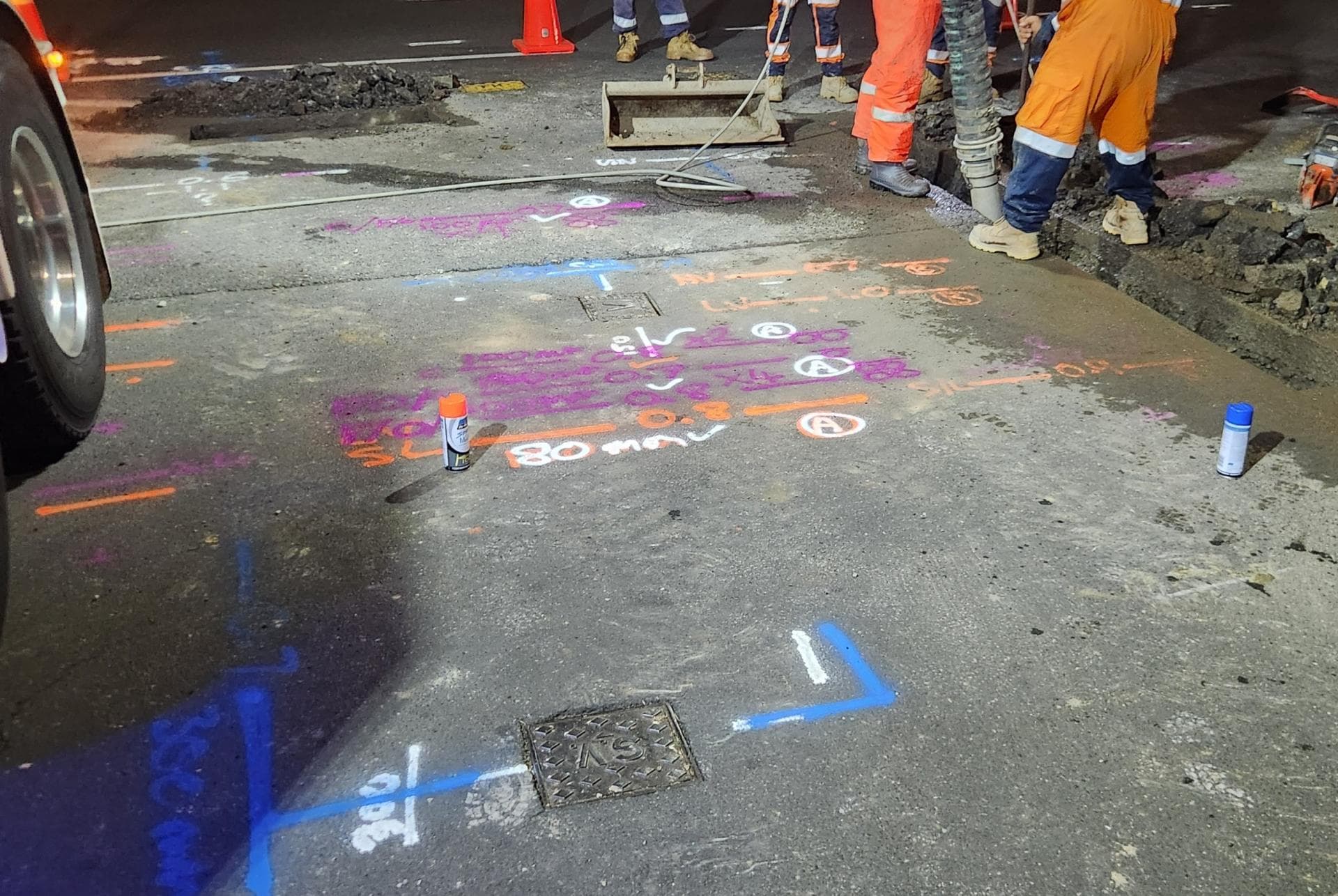
- Physical marking of confirmed service locations on site, using paint or pegs
The goal is simple: give everyone on site a clear, accurate picture of what's underground before any digging starts.
Why This Step Gets Skipped (And Why It Shouldn't)
On tight timelines, it's easy to see a pre-dig investigation as an extra step that slows things down. In reality, it's one of the fastest ways to avoid a delay, not cause one.
Striking an underground service mid-dig can mean:
- Unplanned repair costs, sometimes running into thousands of dollars
- Service outages for the property or neighbouring properties
- Safety risks, particularly with live electrical cables or gas lines
- Project delays while repairs are made and the relevant authority is notified
A pre-dig check typically takes a fraction of the time these incidents cost to resolve, which is why most experienced contractors treat it as non-negotiable.
Legal and Safety Obligations
In New Zealand, anyone planning to excavate near underground infrastructure has a duty of care to check for services beforehand. This is often referred to as a "before you dig" process, and it usually starts with lodging a request through the national service information system to identify registered utility owners in the area.
However, submitted plans don't always tell the whole story. Older infrastructure, unrecorded private connections, and inaccurate historical records mean physical, on-site detection is still essential — even when you've already checked the plans.
What Happens During a Pre-Dig Investigation
A typical pre-dig services check follows a clear process:
- Reviewing existing utility records and any plans already lodged for the site
- Scanning the site using ground penetrating radar and cable locating equipment
- Cross-referencing findings against the records to identify any discrepancies
- Marking confirmed locations clearly on site, using standard colour coding
- Providing a report documenting what was found, for the project file and future reference
This process works for residential sections, commercial sites, and larger civil or subdivision projects alike — the scale changes, but the fundamentals don't.
Who Needs a Pre-Dig Investigation?
Pre-dig investigations aren't just for large civil contractors. They're relevant for:
- Homeowners planning to dig for a new deck, pool, retaining wall, or landscaping
- Builders and developers starting groundworks on a new build or subdivision
- Civil contractors working near existing infrastructure on any scale of project
- Fencing and landscaping companies doing routine ground disturbance work
If a project involves breaking ground anywhere in Auckland, Franklin, or North Waikato, a pre-dig check is worth factoring into the plan from the start.
Get Your Site Checked Before You Break Ground
Skipping a pre-dig services check is one of the easiest ways to turn a straightforward excavation into an expensive, drawn-out problem. A proper investigation takes far less time than dealing with a service strike, and it gives everyone on site confidence about what's underground before work begins.
If you've got a project coming up anywhere in Auckland, Franklin, or North Waikato, get in touch with the Utility Works team to arrange a pre-dig investigation before you excavate. Find out more about our pre-dig services investigation
Frequently Asked Questions
What is a pre-dig services check?
A pre-dig services check is an on-site investigation carried out before excavation to locate and mark underground services such as power, water, gas, and communications infrastructure, reducing the risk of accidental damage.
Is a pre-dig investigation legally required in New Zealand?
Anyone excavating near underground infrastructure has a duty of care to check for services beforehand. This usually starts with a "before you dig" request through the national service information system, though physical on-site detection is still recommended given the limits of existing records.
How long does a pre-dig investigation take?
This depends on site size and complexity, but most residential pre-dig checks can be completed within a few hours to a day, with a written report provided shortly after.
What happens if I don't get a pre-dig check before excavating?
Without a pre-dig check, you risk striking underground services, which can cause outages, safety hazards, and repair costs — along with delays to your project while the damage is assessed and fixed.
Do I need a pre-dig check for a small residential project?
Yes. Even small projects like deck footings, retaining walls, or garden landscaping can encounter underground services close to the surface, so a pre-dig check is worthwhile regardless of project size.
Let's discuss your underground project needs. Contact us today for a free, no-obligation quote.
Free, no-obligation quote · Mon–Fri 7am–5pm · Auckland, Franklin & North Waikato