
Underground Service Locating in Thames
Local underground service locating for Thames and the wider Thames & Hauraki area
Since 2015Own locators, hydro-vac & diggersAuckland · Franklin · North Waikato
Leak detection and service detection jobs can start from $300 +GST. Every job is different, so call 0800 779 588 and we’ll talk through your situation and give you an estimate.
Underground Service Locating for Thames properties, sites and farms
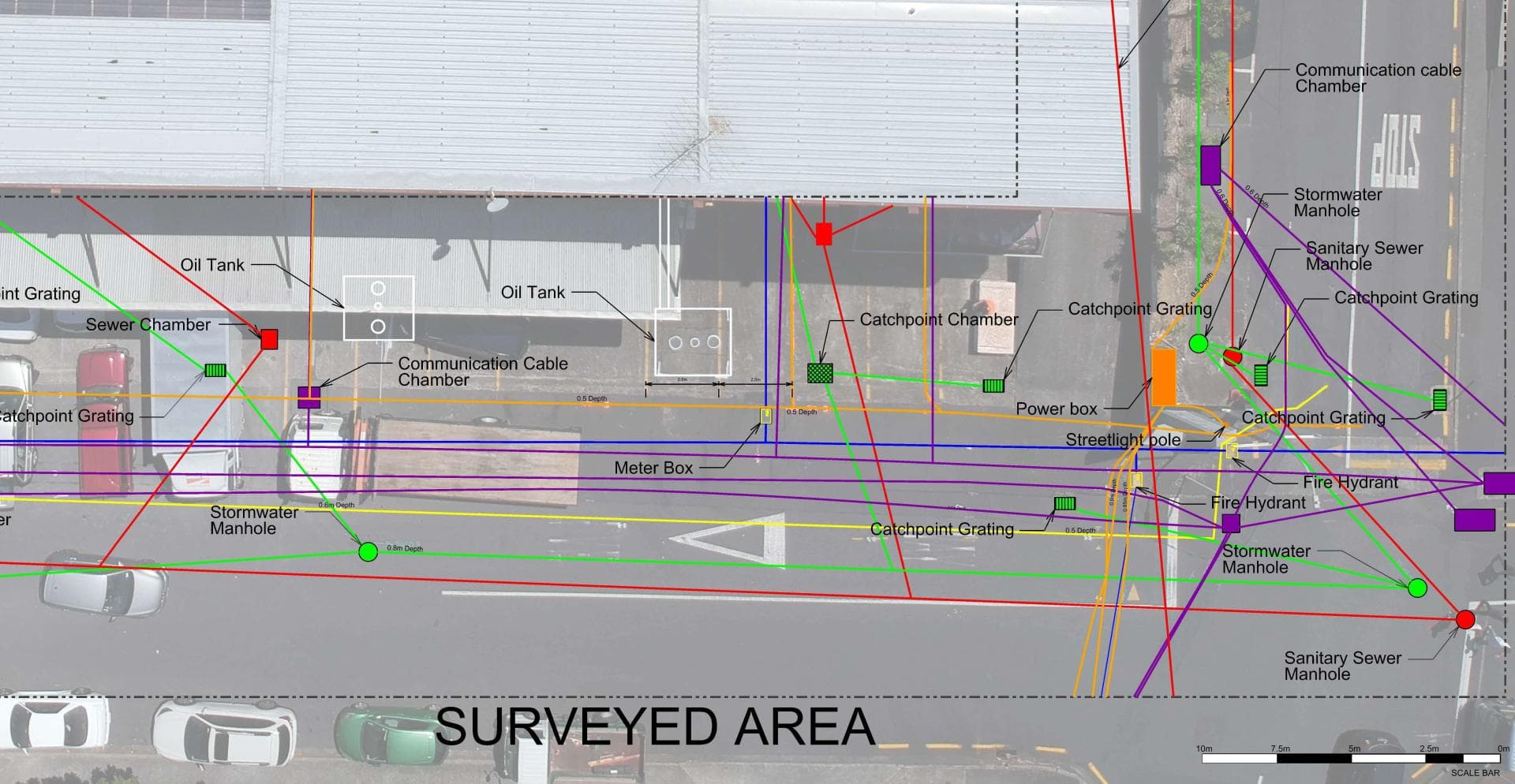
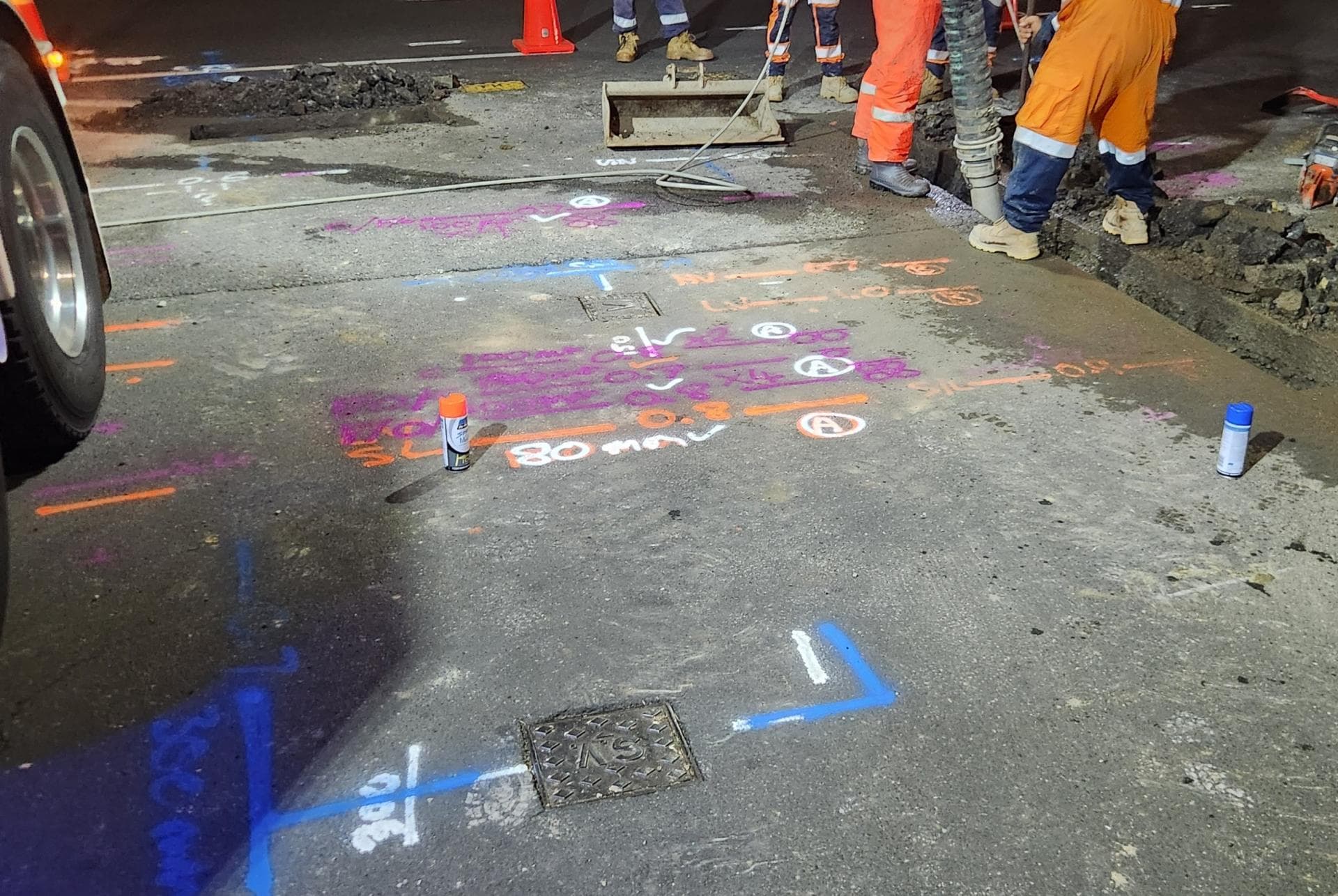
Before anyone digs in Thames, the old services need finding, and the records for a town this age are thin. Utility Works travels to Thames with electromagnetic locators, GPR and a hydro-vac truck together, so we can trace power, water, gas, comms and drainage, mark them with depth and pothole anything critical in the same visit. If the excavation or repair follows, our digger and crew are already on site, a combination you will not get from a single local trade.
Typical underground service locating jobs in Thames
- Marking services before footings and drainage on infill builds in older Thames streets
- Locating power, water and fibre ahead of fit-outs in heritage commercial premises
- Potholing to confirm service depth before driveway and retaining-wall excavation on hill sections
Underground Service Locating, in short
Before anyone digs, we find what is already in the ground: power cables, water and gas pipes, fibre and copper ducts, stormwater and sewer. Electromagnetic locators, tracer equipment, sonde-fitted cameras and ground penetrating radar each pick up what the others cannot, and we mark every service with its depth. Asset owners’ plans from beforeUdig are the starting point; the mark-out shows where things actually are. Where a service must be seen, our hydro-vac truck potholes it without damage, and if the job then needs trenching or a repair the same crew carries on. We can also record what we find with survey-grade GPS for plans and consents.
Full details: Service Location, Detection & Mapping →Working underground in Thames
Thames sits where the Coromandel Peninsula meets the Hauraki Plains, strung along the eastern shore of the Firth. The town grew quickly in its gold-mining years and much of what stands today dates from that era or the decades after it, including a long run of heritage commercial buildings on the main street and plenty of older timber housing behind them.
The ground changes sharply across town. The flat land towards the Firth and the plains is soft alluvial material with a high water table, while the streets climbing the hills behind are on steep, rocky ground. Water and wastewater are run by Thames-Coromandel District Council, and the mix of old pipe and variable ground keeps leak and locating work interesting.
Thames is a long way from most Auckland contractors, and that distance is the point. Utility Works arrives with locators, hydro-vac truck and digger on the same trip, so a job that would otherwise mean three separate visits from three separate trades is handled in one. We group Hauraki work into runs so the travel is never wasted.
When Thames’ homes were built, and what went in with them
The age of a house tells us what pipe and cable to expect underneath it before we arrive.
Before 1960
Thames is a goldfield town. Shortland was founded in July 1867 and Grahamstown in 1868, the two merged in 1874, and the population reached about 15,000 in 1870 before falling to 4,500 by 1881. The timber shopfronts at the Grahamstown end of Pollen Street and the villas and cottages on the flat behind them date from those years, and much of the town's housing still does.
1960s to 1980s
Infill on the flat and the first houses up the hill streets. The Moanataiari subdivision stands on land reclaimed from the sea with mine tailings dumped in the mid-20th century, which is why its soil tested high for arsenic in 2011.
1985 to 2000
Little new building; Thames remains a town of about 7,200 people.
Since 2000
Infill on the flat and towards Kopu, and fit-outs in the heritage buildings along Pollen Street.
What is buried under Thames’ sections
Thames has some of the oldest pipe anywhere in the region. Under the 1870s to 1920s streets on the flat we expect galvanised steel laterals, some close to a century old, off cast iron mains with lead joints, with asbestos-cement where mains were renewed mid-century. Galvanised that age is more rust than steel, so leaks are pinholes and split threads and a lateral can be leaking in two or three places at once. Lead-jointed cast iron weeps at the joints whenever the ground moves.
On the hill streets the lines are younger and shorter but run steeply, so a leak surfaces well downhill of the pipe. Moanataiari and the post-war infill carry copper and early PVC, and anything from the 1990s on is MDPE without a reliable tracer wire. The practical result is that most Thames pipe is metal and traces well, but it is fragile, so we expose it with hydro-vac rather than a bar, and we expect abandoned lines from earlier buildings on the same lot. Under Pollen Street the services are layered a century deep, and the plans stop short of the shop.
What Thames’ soft flats and hill rock means for locating
Two kinds of ground meet in Thames. The hills behind the town are Coromandel Range volcanics, andesite and rhyolite from eruptions that ended about five million years ago, and the goldfield's shafts and drives run into them. The flat the town sits on is young river and estuary sediment at the edge of the Firth, and the seaward strip at Moanataiari is reclaimed land built on mine tailings whose arsenic levels, found in 2011, are well above residential soil guidelines, so spoil there stays contained. The water table on the flat is close to the surface.
The old workings are the hazard nobody else allows for. The district council describes Thames as especially vulnerable to old mine shafts collapsing; in April 2012 one opened under State Highway 25 just north of town, and the 1872 Big Pump shaft nearby is thought to be close to 200 metres deep. Radar is how we check for voids before a dig on the hill side. On the flat, the Waihou Valley scheme's 120 kilometres of stopbanks protect against a one-in-100-year river flood and a tidal surge in the Firth, built after the 1981 flood put Thames and Paeroa under water.
Who owns the cables and pipes in Thames
Which network a service belongs to decides who fixes it, who you call first and whose plans a beforeUdig request returns.
Water supply
Thames-Coromandel District Council still runs the town's water itself: after Western Bay of Plenty voted in August 2025 to form its joint organisation with Tauranga without Thames-Coromandel, the council took its Water Services Delivery Plan forward on an in-house unit, and the Government accepted it in November 2025. Thames township is fully metered; the toby beside the meter is your shut-off, the council repairs leaks on the road side and in the meter box, and its own brochure says a leak found by the meter test is yours to repair.
Wastewater
TCDC runs the Thames sewer; properties outside the reticulated area, up the Kauaeranga valley and along the coast, are on septic systems.
Electricity
Powerco's Coromandel network area covers Thames, Coromandel, Whitianga, Tairua and Ngātea.
Gas
We have not found a reticulated natural gas network in Thames; gas here is bottled LPG. If a plan shows a gas main, treat it as live and call Firstgas.
Fibre and phone
Chorus completed Thames's fibre build in 2018, covering about 3,000 homes and businesses, and owns the copper.
beforeUdig plans
A beforeUdig request in Thames returns TCDC water, wastewater and stormwater plans plus Powerco and Chorus; it will not show private laterals, 19th-century drains or mine adits.
One crew for Thames: find it, dig it, fix it.
Thames is about an hour and 40 minutes from Waiau Pa, so we quote it as a full day's work, and travel is a small part of the cost on a job of any size.
Get a free quoteNeed underground service locating in Thames? Call us for a free, no-obligation quote.
Free, no-obligation quote · Mon–Fri 7am–5pm · Auckland, Franklin & North Waikato
Google reviews
What customers say
“Prompt service & fair pricing. Tony and his team — sharp eye for detail and out of the box problem solving paired with a high standard of workmanship.”
Richard La Trobe · Google · October 2026
“Really happy with the work to install our underground services. Highly recommend.”
Sarah Walworth · Google · October 2026
“The only company we trust… reliable, cost effective, and honest service from A to Z. 100% confidence in this company.”
Darrel Assink · Google · September 2026
Our Projects
Tuakau, North Waikato
Services Detection & Mapping in Tuakau
A local power network provider in Pukekohe needed expert service detection and mapping. With multiple high-voltage cables traced and marked out, duct and drainage tracing, water mains tracing and multiple communications cables in the vicinity, the project required our specialist services and expertise.
Read the case study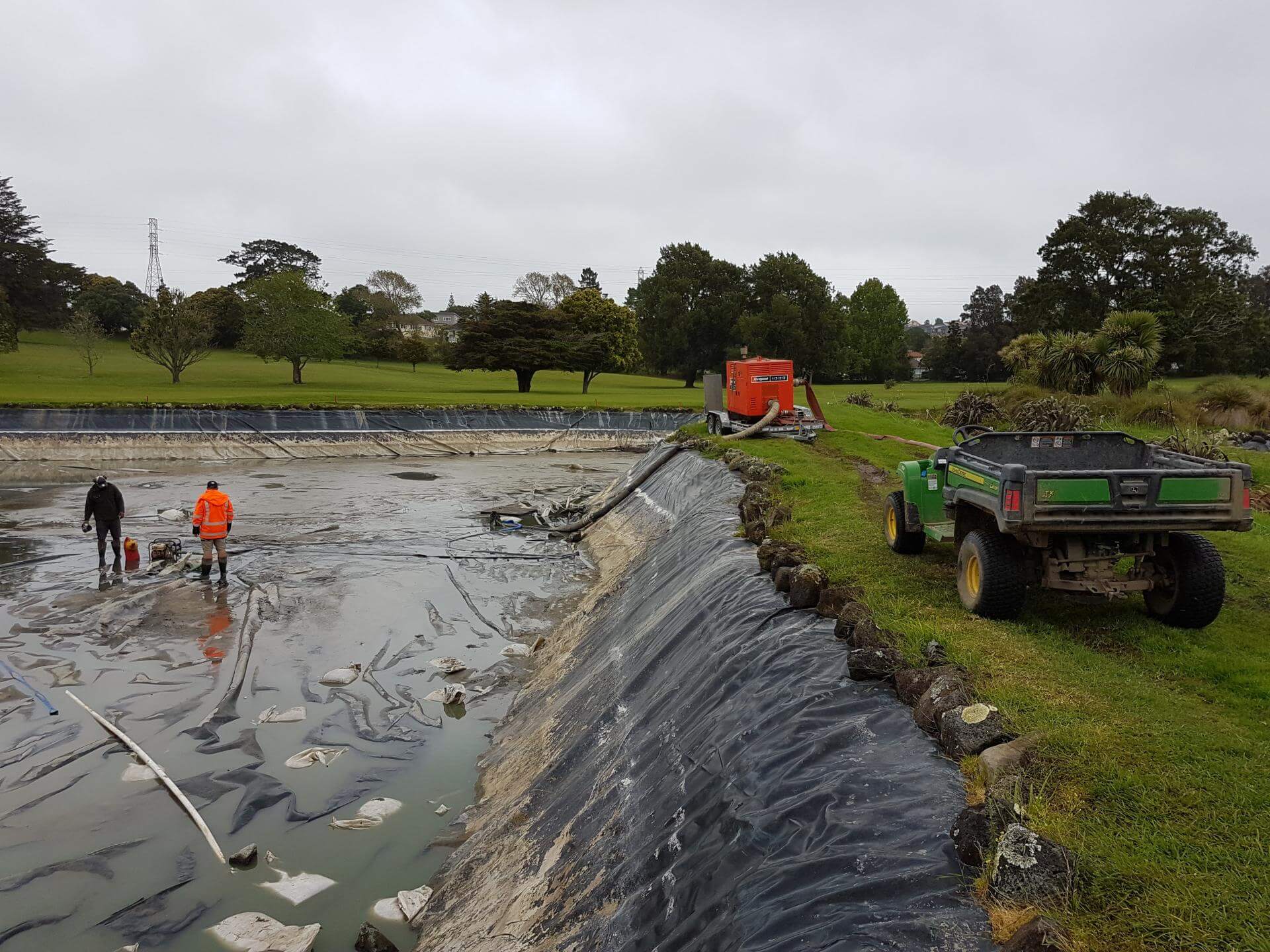
Auckland
Golf Course Pond Leak Detection in Auckland
Lined ponds pose many challenges once underground loss occurs. Utility Works was contracted to assist with the locating of pond leaks at a large Auckland golf course ahead of the dry summer months, when the irrigation system relied on the water supply. The process involved underwater diving and installation of pipe air bags to block the balance pipe and separate the two ponds, enabling accurate loss calculation, followed by GPR and IR works to determine likely areas of loss. The ponds were pumped out to enable locating of the defects for repair. We also assisted with the irrigation flow and isolation testing during the process.
Read the case studyUnderground Service Locating nearby
Other services in Thames
Underground Service Locating in Thames: your questions
Could there be an old mine shaft under my Thames section, and can you find it?
Is it safe to dig a trench on a Moanataiari section?
Why are leaks under Pollen Street so hard to pin down?
Ready when you are.
Tell us what you’re seeing or what you’re planning. You’ll get a straight answer, a free quote and one crew that does the whole job.
Mon–Fri 7am–5pm · Waiau Pa, South Auckland · Auckland, Franklin & North Waikato