
Underground Utility Installation in Pōkeno
Local underground utility installation for Pōkeno and the wider North Waikato & Hamilton area
Since 2015Own locators, hydro-vac & diggersAuckland · Franklin · North Waikato
Underground Utility Installation for Pōkeno properties, sites and farms
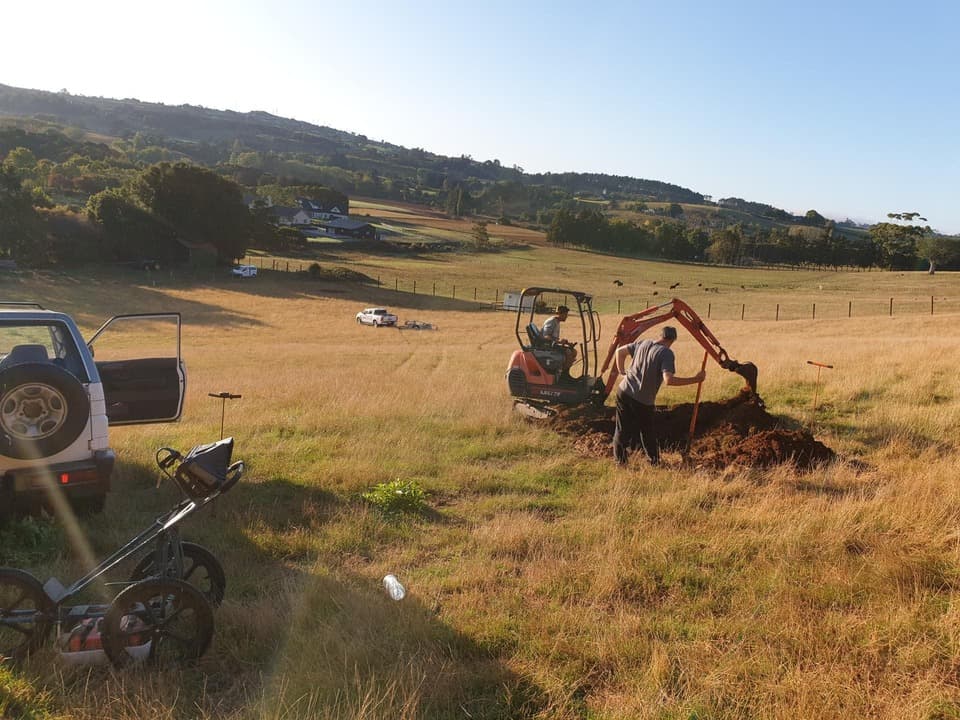
Pōkeno's rapid growth means underground installation at every scale: house connections on subdivision lots, power and water to new commercial and industrial buildings by the expressway, and long rural runs to houses and sheds on the lifestyle blocks beyond. Utility Works installs power, water, communications and drainage across Pōkeno, trenching the clay hillsides carefully to keep grade and depth right and directionally drilling where a driveway or landscaped section should not be opened. We locate the recently laid services first, since records lag the building.
Typical underground utility installation jobs in Pōkeno
- Installing house service connections on steep subdivision lots
- Running power, water and fibre to new commercial and industrial buildings
- Long rural power and water installations to lifestyle-block houses and sheds
Underground Utility Installation, in short
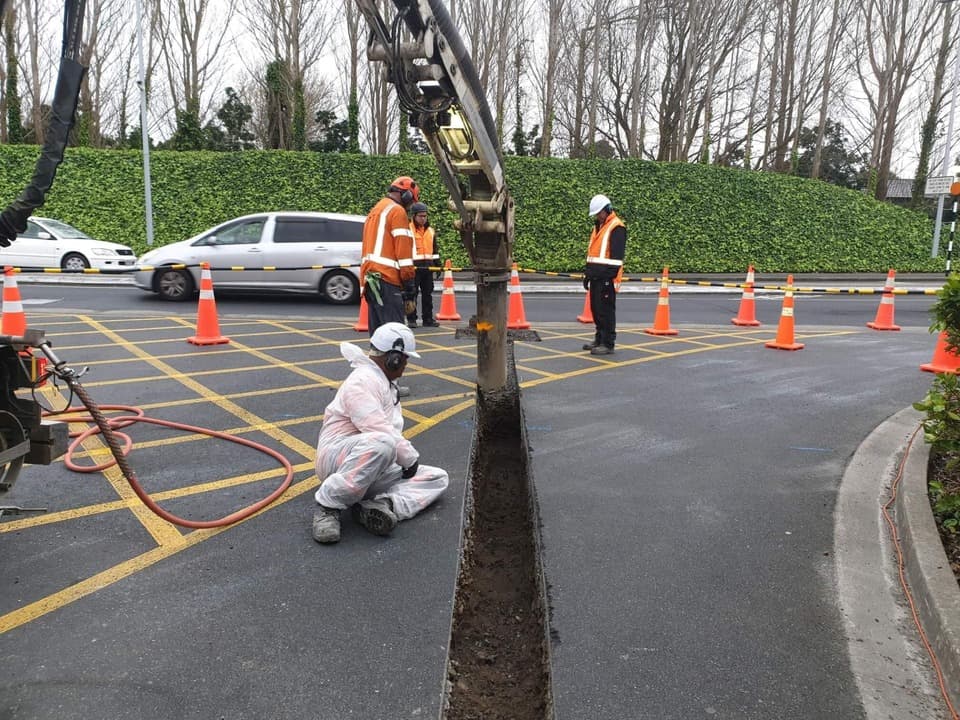
New homes, sheds, subdivisions and rural properties need power, water, communications and drainage run underground. We install them as one package: locate what is already there, trench or directionally drill the new route, lay cable and pipe to the required depth and separation with marker tape, backfill, compact and reinstate. Power, water and comms share a trench where the separation rules allow. We coordinate the live connection with your electrician, the lines company and the water authority, and hydro-vac keeps wet trenches clear on rural runs.
Full details: Complete Utility Installation →Working underground in Pōkeno
Pōkeno has gone from a small rural stop on State Highway 1 to one of the fastest-growing settlements in North Waikato. Large residential subdivisions have spread across the hills around the old village, and industrial and food-processing operations have set up on the flat land near the expressway.
That growth means a great deal of new underground infrastructure laid in a short time, and not all of it is recorded accurately. The hilly ground is mostly clay, which holds water and can carry a leak some distance downhill before it shows on the surface.
Reticulated water and wastewater are managed by Waikato District Council. Outside the subdivisions, lifestyle blocks and farms rely on bores and tanks, and many have older private lines that pre-date the recent growth. We reach Pōkeno quickly via the expressway from Waiau Pa.
When Pōkeno was built, and what new services run past
The age of a house tells us what pipe and cable to expect underneath it before we arrive.
Before 1960
Pōkeno grew up on the Great South Road around the site of the 1862 Queen's Redoubt and the railway station that opened in 1875. The old village is a few streets of houses along the former highway.
1960s to 1980s
A highway stop. The station closed to passengers in 1973 and to goods in 1980, and the village added little beyond farmhouses and the roadside businesses serving State Highway 1 traffic.
1985 to 2000
The 1992 upgrade of State Highway 1 to expressway standard bypassed the town. Pōkeno still had only about 500 people in the mid 2000s, so little housing dates from this period.
Since 2000
Almost everything. The population went from 570 in 2006 to 2,619 in 2018 and 6,081 in 2023, a rise of 132 per cent in five years, with 1,812 dwellings counted in 2023; the council puts growth at 341 per cent between 2014 and 2021. Nearly every house, pipe and cable in Pōkeno is less than fifteen years old.
What is already in the ground in Pōkeno
Pōkeno turns the usual Franklin story on its head. There is almost no old pipe to worry about: the handful of village houses on the old highway may still have galvanised laterals, and the lifestyle blocks on the surrounding hills run alkathene from bores, but the town itself is PE100 and PVC with tracer wire, laid since about 2012.
The trouble is how it was laid. More than 1,500 houses went up in a decade on cut-and-fill lots across the hills, with a different contractor on every stage. We find laterals crushed where a retaining wall footing went through them, tracer wire severed at the boundary so the plastic line is invisible to a locator, tobies buried half a metre under imported fill, and services sitting at odd depths where a lot was cut down or built up after the mains went in. New pipe, old problems. Radar and the hydro-vac do most of the finding here.
Running new services through Pōkeno’s clay hills
A geologist writing in the Auckland GeoClub's newsletter put it plainly: there is a great deal going on under Pōkeno. Within a few kilometres there is Late Oligocene sandstone, Miocene Mercer Sandstone of the Waitemata Group, river-laid Puketoka Formation, Tauranga Group ignimbrite and rhyolitic sediment about a million years old, South Auckland volcanic field basalt and tuff from the Pōkeno Cone, the Pōkeno West tuff ring and the Bluff Road and Helenslee Road vents, and a large fault. Much of it has weathered to clay, including soft white and pink pumiceous clays that an older survey named the Pokeno Clay.
For us that means wet, sticky, slow-draining ground on the hills, with cut slopes that slump and fill that settles. A leak runs downhill along the interface between fill and clay and surfaces well below the break, so the wet patch is a direction, not a location. Radar loses depth in saturated clay and tuff, so we calibrate on site and pothole anything the build depends on. Trenching can hit soft rock within a metre or two on the ridges, and the flat land by the expressway is alluvium with a high water table where trenches fill.
Who you connect to in Pōkeno
Which network a service belongs to decides who fixes it, who you call first and whose plans a beforeUdig request returns.
Water supply
IAWAI Flowing Waters has run Pōkeno's water since 1 July 2026, with the water still coming from Watercare's Waikato River plant at Buckland. The Waikato District Water Supply Bylaw 2023 puts the point of supply on the pipe from the main to your premises; the council side maintains the service pipe to that point, you maintain the supply pipe beyond it, and the toby beside the meter is yours to keep accessible.
Wastewater
Pōkeno's sewage is pumped to Watercare's Pukekohe plant across the regional boundary, doubled to 60,000 households in 2023. The local network is IAWAI's; the lifestyle blocks are on septic.
Electricity
Counties Energy, whose network runs from southern Papakura to Mercer and takes in Pōkeno's stages and the expressway industrial land.
Gas
Vector names Pōkeno, with Tuakau, as the northern Waikato part of its gas distribution network, so new streets can carry gas mains.
Fibre and phone
Chorus owns the copper and the fibre; the Pōkeno UFB build is listed as complete.
beforeUdig plans
A request returns Counties Energy, Waikato District Council water and wastewater, Vector Gas, Chorus and NZTA along the expressway. On a new lot the developer's as-builts may not be loaded yet, and no plan shows a lateral moved during landscaping.
One crew for Pōkeno: find it, dig it, fix it.
Pōkeno is about 35 minutes from Waiau Pa via Drury and the expressway, so travel adds little.
Get a free quoteNeed underground utility installation in Pōkeno? Call us for a free, no-obligation quote.
Free, no-obligation quote · Mon–Fri 7am–5pm · Auckland, Franklin & North Waikato
Google reviews
What customers say
“Prompt service & fair pricing. Tony and his team — sharp eye for detail and out of the box problem solving paired with a high standard of workmanship.”
Richard La Trobe · Google · October 2026
“Really happy with the work to install our underground services. Highly recommend.”
Sarah Walworth · Google · October 2026
“The only company we trust… reliable, cost effective, and honest service from A to Z. 100% confidence in this company.”
Darrel Assink · Google · September 2026
Our Projects
North Waikato
Rural Power Mains Installation in North Waikato
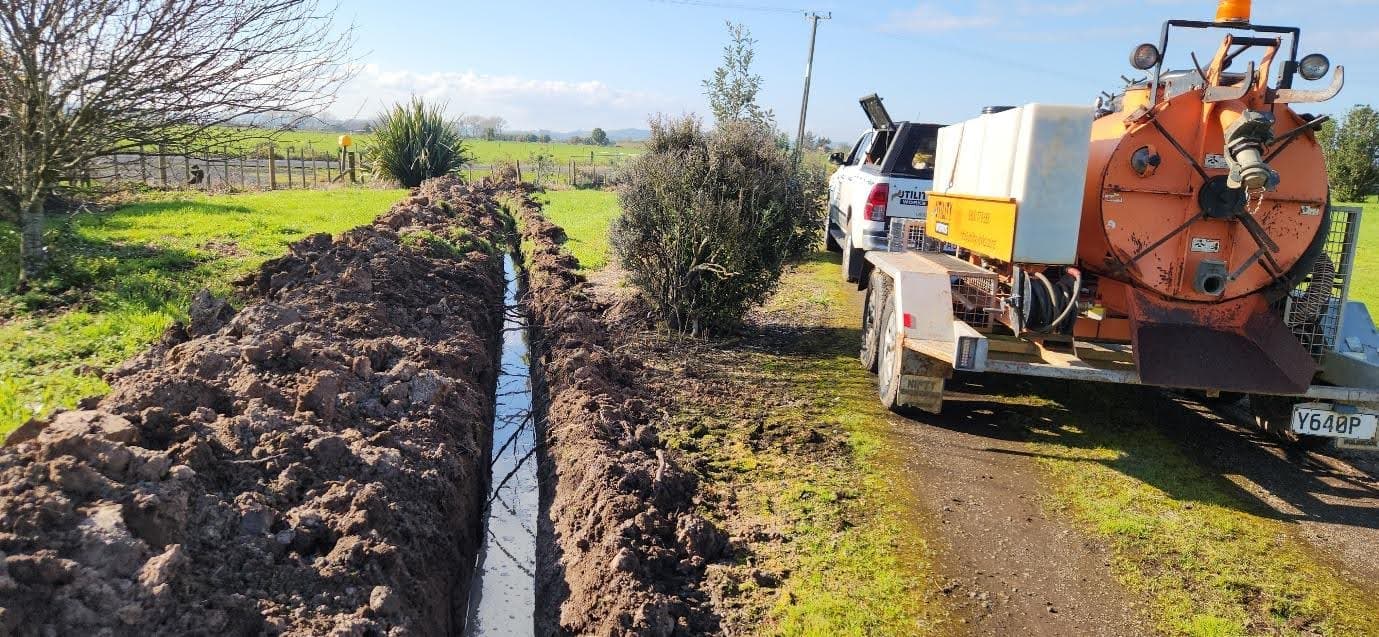
Utility Works was commissioned to install a new power mains cable on a rural North Waikato property. The project involved existing services detection, excavator trenching, and hydro-vac works to keep the trench clear due to in-flow during the project, followed by installation of the three-phase cable and final connect and commission. The project was completed on time and within budget.
Read the case study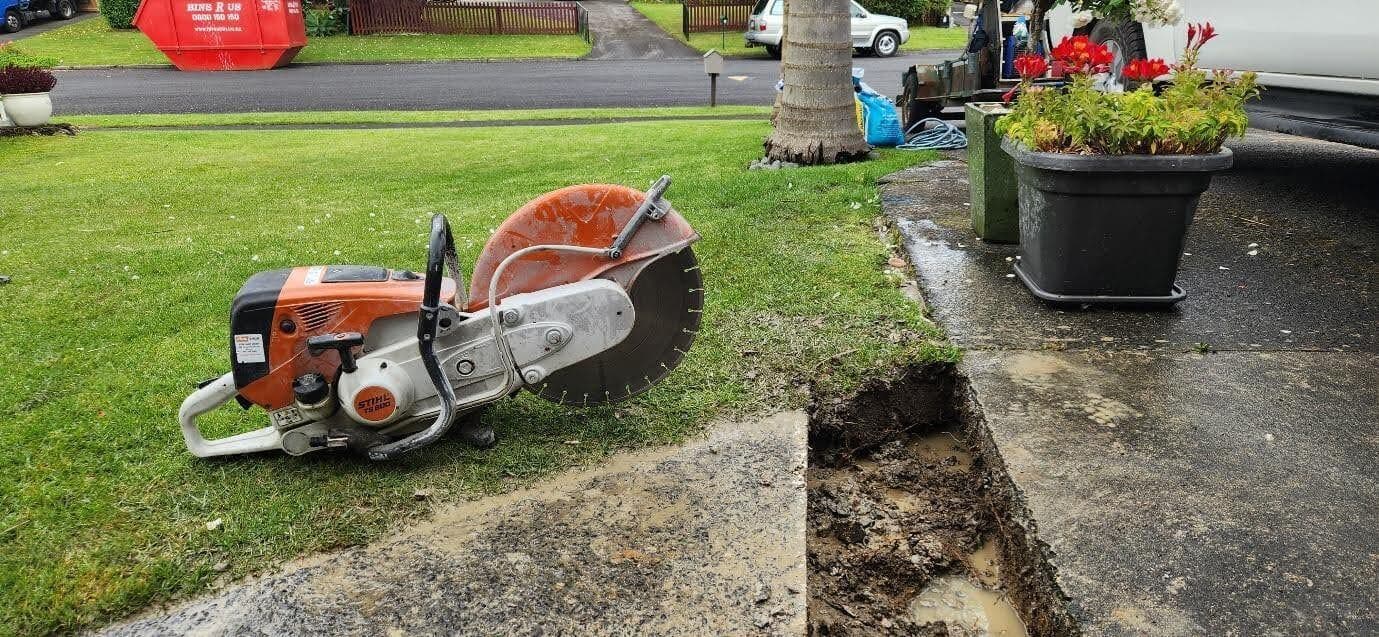
South Auckland
Auckland Residential Water Mains Replacement
After the aged water mains at a residential property in South Auckland had many failures, Utility Works was contracted to renew the system. The project involved services detection, concrete cutting, and hydro-vac trenching to minimise risk and damage to other services in the work zone. The new water mains were installed with a new inlet valve, toby, and relayed concrete, and the property reinstated to its original condition.
Read the case studyUnderground Utility Installation nearby
Underground Utility Installation in Pōkeno: your questions
Can you locate services on a Pōkeno lot that was cut and filled?
What does beforeUdig return for a Pōkeno address?
Ready when you are.
Tell us what you’re seeing or what you’re planning. You’ll get a straight answer, a free quote and one crew that does the whole job.
Mon–Fri 7am–5pm · Waiau Pa, South Auckland · Auckland, Franklin & North Waikato