
GPR Scanning in Hamilton
Local ground penetrating radar scanning for Hamilton and the wider North Waikato & Hamilton area
Since 2015Own locators, hydro-vac & diggersAuckland · Franklin · North Waikato
GPR Scanning for Hamilton properties, sites and farms
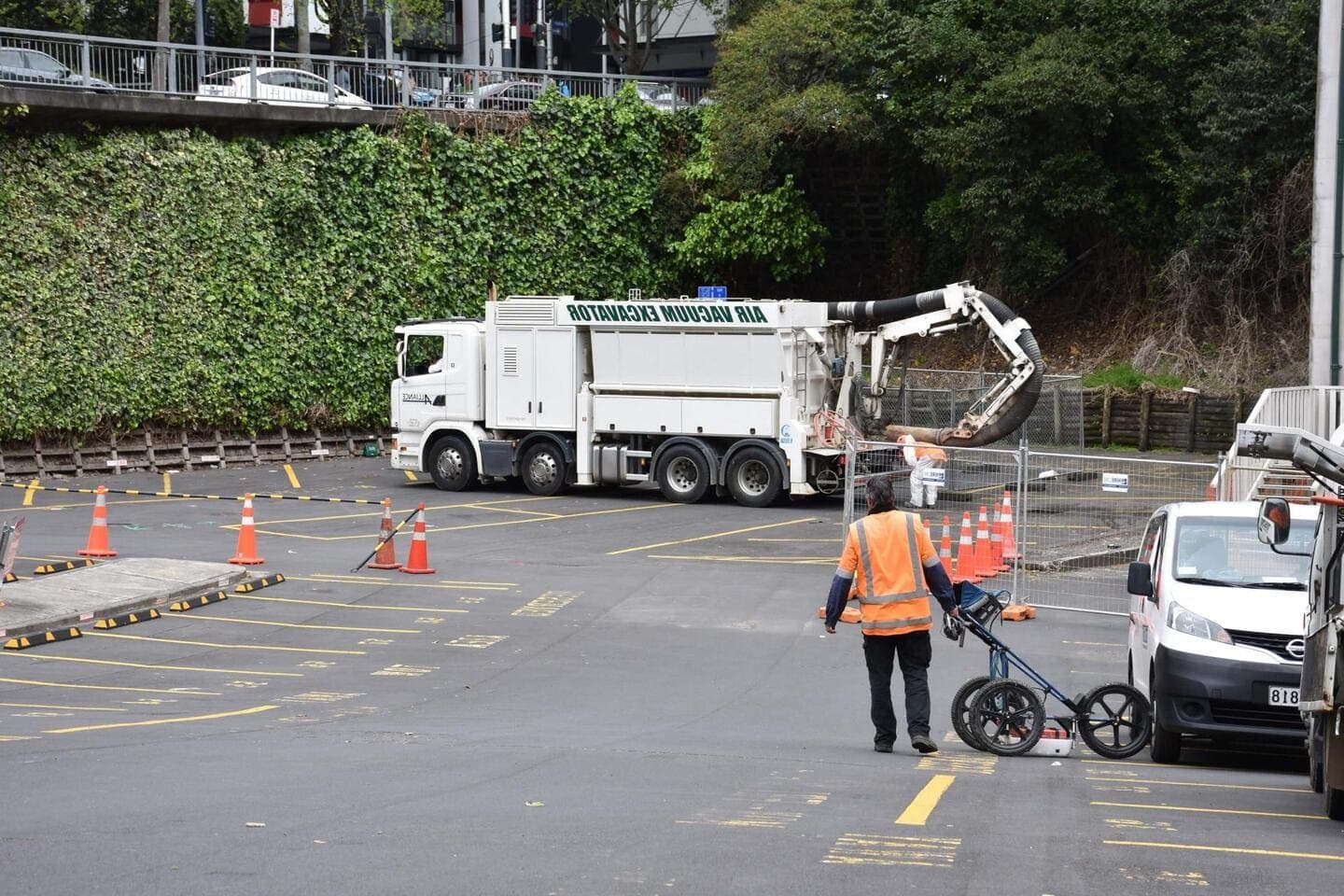
Large industrial sites on Hamilton's northern side have a lot underground that no electromagnetic locator can see: plastic water and gas mains without tracer wires, old concrete culverts, disused tanks and foundations from earlier buildings. Radar is what finds them. Utility Works scans sites across Te Rapa and the Expressway industrial parks alongside standard locating, and scans slabs before cutting or coring. When the radar shows something the job depends on, our own hydro-vac truck confirms it there and then rather than leaving it for another contractor.
Typical ground penetrating radar scanning jobs in Hamilton
- Scanning for unmarked plastic mains and old culverts across industrial yards before works
- Concrete scanning for rebar, conduits and post-tension cables before coring warehouse slabs
- Locating buried tanks and foundations on sites being cleared for redevelopment
GPR Scanning, in short
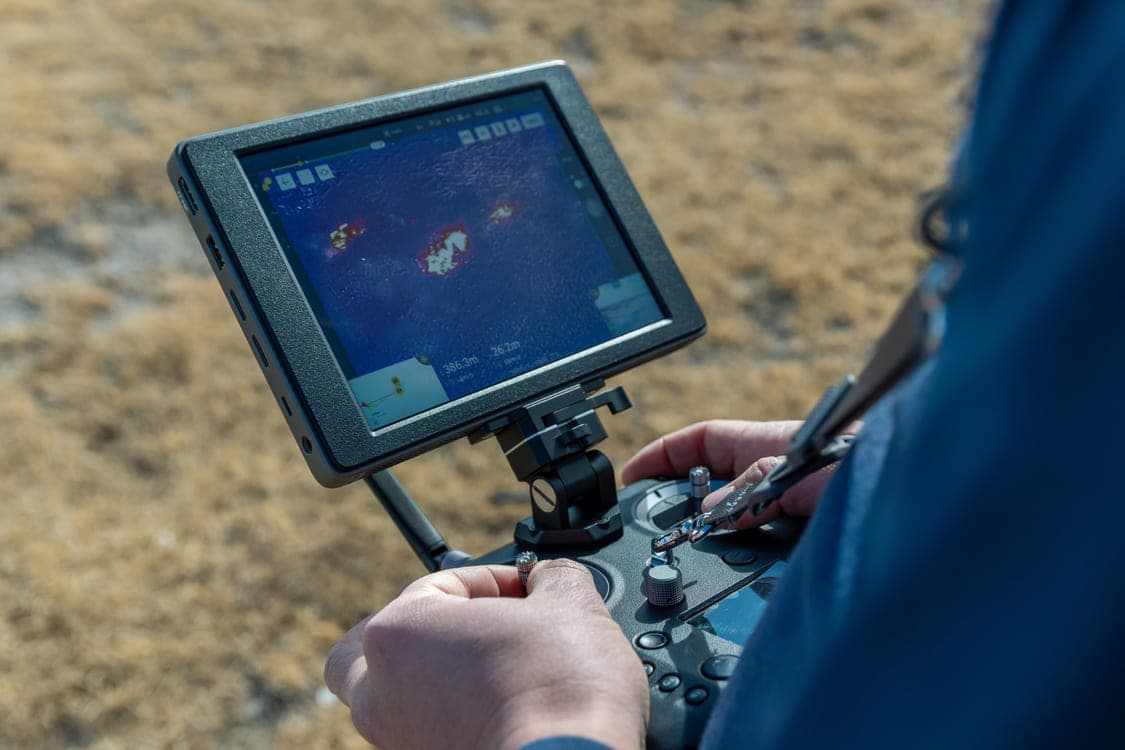
Electromagnetic locators only find metal or a pipe carrying a signal. Plastic water and gas lines with no tracer wire, old septic tanks, culverts, voids, buried foundations and rebar in slabs are invisible to them. Ground penetrating radar sends a pulse into the ground and reads what bounces back, so we can mark those features whatever they are made of. We run radar alongside our other locating methods, confirm anything doubtful by potholing with our own hydro-vac, and supply marks on the ground or a plan for your designer or contractor.
Full details: Ground Penetrating Radar Investigations →Working underground in Hamilton
Hamilton is the southern end of our run from Waiau Pa. We cover the city's northern side, taking in Te Rapa, Rototuna, Horotiu and the industrial parks along the Waikato Expressway, where the sites are large, the pipes are big and the cost of water loss or a struck service is high.
Hamilton City Council runs the city's water, wastewater and stormwater. The northern industrial and commercial areas have extensive private networks under yards, car parks and warehouses, often laid in stages over decades, with records that have not kept pace with the buildings on top of them.
Hamilton has locating contractors of its own, and we are not pretending otherwise. What we bring is the rest of the job: locators, hydro-vac trucks, excavators and a repair crew in the same team, so once a leak or service is found we dig it, fix it and reinstate it without handing you to a second company.
When Hamilton’s buildings went up, and what radar will find
The age of a house tells us what pipe and cable to expect underneath it before we arrive.
Before 1960
On the northern side this means Te Rapa, a railway settlement from 1877 and later a marshalling-yard and factory zone rather than a suburb. Pre-war housing is thin on the ground north of the city centre.
1960s to 1980s
Te Rapa's dairy factory opened in 1968 and the marshalling yard in 1971, and Pukete was built as a riverside suburb from 1969 over roughly a decade. Expect 1970s brick-and-tile and weatherboard on copper laterals in Pukete, and the first big industrial sites in Te Rapa.
1985 to 2000
Flagstaff was declared a suburb in 1986 and heavily developed through the 1990s; Rototuna still had only 453 people in 1996.
Since 2000
The boom. Rototuna grew to 12,213 people by 2023 and Flagstaff from 5,898 in 2013 to 12,777, the former air force base became The Base shopping centre in 2005, and the Te Rapa expressway section opened in December 2012 with the Hamilton section following in 2022.
Plastic pipe, old tanks and slabs under Hamilton
Hamilton's northern side splits cleanly by age. Pukete and the older Te Rapa industrial sites are 1970s work: copper laterals and galvanised yard lines off asbestos-cement or early PVC mains. A fifty-year-old galvanised yard main on an industrial site is usually leaking somewhere, and an AC main under a loading yard cracks under truck loads. Because Hamilton homes are not yet metered, a residential leak in Pukete can run for years with nothing on a bill to flag it.
Flagstaff and Rototuna are 1990s onward: MDPE laterals and PVC-O or PE mains with, in theory, tracer wire. In practice the wire is often cut or never connected, and the private side was laid by the house builder, so the as-built rarely matches the trench. Fitting failures at the boundary box and damage from landscaping are the usual leaks here, not corrosion. For locating, Te Rapa's metal lines trace well while Rototuna's plastic needs radar or a hydro-vac pothole, and on commercial sites of any age we expect fire mains, disused tanks and old yard drains that nobody recorded.
How radar performs in Hamilton’s peat and alluvium
Hamilton sits on the Hinuera Surface, a fan of volcanic sand, silt and pumice washed out of the Taupō area about 20,000 years ago when a dam of ash gave way. It is good digging and good radar ground: free-draining and low in clay, so GPR reads deep and trench walls stand. The complication on the northern side is what cuts through it. Rototuna is built along the Kirikiriroa Stream valley, a 15-kilometre gully system with a dozen branches, one of the city's six major gully complexes, and a pipe across a filled gully head sits on soft wet fill, not pumice.
Peat is the other story. Hamilton was ringed by seven large peat bogs, Komakorau to the north among them, and Te Rapa lies on an old river course with Lake Rotokauri, a peat lake whose catchment is now residential, industrial and pastoral, just to the west. Peat shrinks as it drains, pulls joints apart, soaks up leaking water and kills radar depth, and the dairy-factory and Rotokauri industrial land is where we meet it most. Beside the river in Pukete the ground is high and dry, since the Waikato has cut well below the surface here.
Who owns the services under Hamilton
Which network a service belongs to decides who fixes it, who you call first and whose plans a beforeUdig request returns.
Water supply
IAWAI Flowing Waters, owned by the Hamilton and Waikato District councils, has run the city's water and wastewater since 1 July 2026. Commercial sites are metered; homes are not yet, with a four-year residential rollout following a 1,500-property trial in late 2026. Under the city bylaw IAWAI maintains the service pipe to the point of supply and you maintain the supply pipe beyond it.
Wastewater
IAWAI runs the city sewers; the 1975 pipe bridge over the river at Pukete carries the east side's sewage, so large trunk sewers cross this part of town.
Electricity
WEL Networks supplies Hamilton City, with more than 100,000 connections and about half its network underground.
Gas
Hamilton has had piped natural gas since the Kapuni transmission line reached the city in the late 1960s; Firstgas runs the distribution network, so expect gas mains under Te Rapa and the established suburbs.
Fibre and phone
Tuatahi First Fibre, the former Ultrafast Fibre, built Hamilton's fibre; Chorus owns the copper.
beforeUdig plans
A beforeUdig request returns IAWAI, council stormwater, WEL, Firstgas, Chorus and Tuatahi plans. The city bylaw also requires excavators to review council records first and give five working days' notice near council water services. Private networks under an industrial yard are on nobody's plan.
One crew for Hamilton: find it, dig it, fix it.
Te Rapa is about 90 minutes from Waiau Pa, so we quote Hamilton work as full or multi-day jobs, and travel is a small part of the quote on a site of any size.
Get a free quoteNeed ground penetrating radar scanning in Hamilton? Call us for a free, no-obligation quote.
Free, no-obligation quote · Mon–Fri 7am–5pm · Auckland, Franklin & North Waikato
Google reviews
What customers say
“Prompt service & fair pricing. Tony and his team — sharp eye for detail and out of the box problem solving paired with a high standard of workmanship.”
Richard La Trobe · Google · October 2026
“Really happy with the work to install our underground services. Highly recommend.”
Sarah Walworth · Google · October 2026
“The only company we trust… reliable, cost effective, and honest service from A to Z. 100% confidence in this company.”
Darrel Assink · Google · September 2026
Our Projects
Tuakau, North Waikato
Services Detection & Mapping in Tuakau
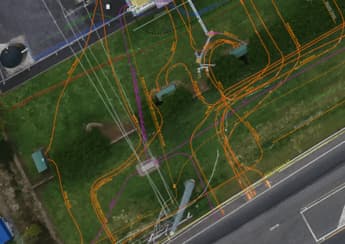
A local power network provider in Pukekohe needed expert service detection and mapping. With multiple high-voltage cables traced and marked out, duct and drainage tracing, water mains tracing and multiple communications cables in the vicinity, the project required our specialist services and expertise.
Read the case study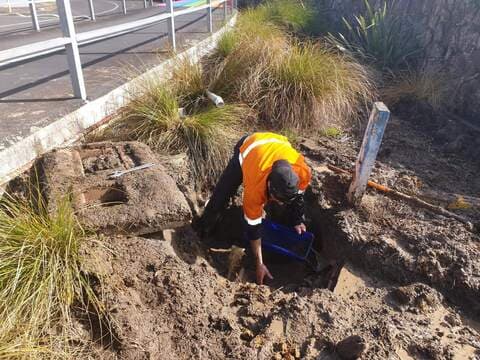
West Auckland
Campus Leak Detection & Repair
After suffering long-term issues with water loss, system configuration and location, Utility Works was engaged to find and repair the leaks at a West Auckland campus. The site spanned over 150 acres with extensive buildings and intertwining historic and modern piping networks. The project involved extensive system isolation and configuration testing, GPR and pipe tracing, re-mapping and full leak detection surveying. Once the losses were located, over 14 underground leaks were excavated and repaired. From initial engagement to completion of the first stage of repairs, the campus saw an 83% reduction in minimum night-flow loss.
Read the case studyGPR Scanning in Hamilton: your questions
Do I need to tell anyone before digging near a water main in Te Rapa?
Why call Utility Works in Hamilton when the city has its own locating companies?
Does Hamilton's peat and gully ground affect GPR scanning in Rototuna or Te Rapa?
Ready when you are.
Tell us what you’re seeing or what you’re planning. You’ll get a straight answer, a free quote and one crew that does the whole job.
Mon–Fri 7am–5pm · Waiau Pa, South Auckland · Auckland, Franklin & North Waikato