
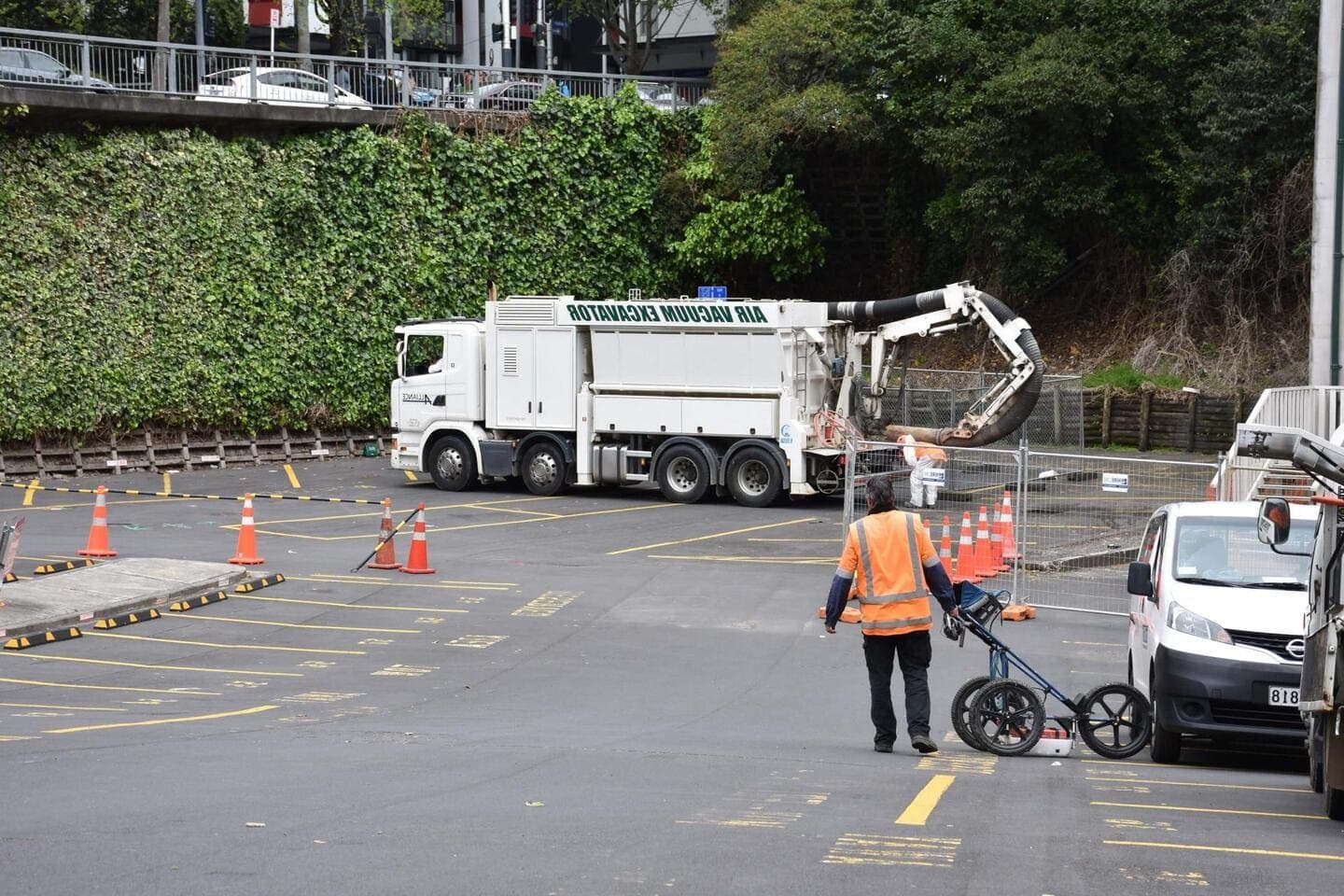
GPR Scanning in Papakura
Local ground penetrating radar scanning for Papakura and the wider South Auckland area
Since 2015Own locators, hydro-vac & diggersAuckland · Franklin · North Waikato
GPR Scanning for Papakura properties, sites and farms
Older sections in Papakura hide things that no plan shows: disused septic tanks from before the sewer arrived, old concrete drains, foundations of demolished buildings and asbestos-cement water lines that no electromagnetic locator will detect. Ground penetrating radar finds them. Utility Works scans Papakura sites before new foundations, pools, retaining walls and infill housing, and scans existing slabs before cutting or coring so conduits and rebar are not hit. The clay ground limits depth a little, and we will tell you where that applies.
Typical ground penetrating radar scanning jobs in Papakura
- Locating old septic tanks and buried structures before infill housing and pools
- Scanning for AC water mains and plastic laterals that standard locators miss
- Slab scanning for conduits and reinforcing before cutting in commercial premises
GPR Scanning, in short
Electromagnetic locators only find metal or a pipe carrying a signal. Plastic water and gas lines with no tracer wire, old septic tanks, culverts, voids, buried foundations and rebar in slabs are invisible to them. Ground penetrating radar sends a pulse into the ground and reads what bounces back, so we can mark those features whatever they are made of. We run radar alongside our other locating methods, confirm anything doubtful by potholing with our own hydro-vac, and supply marks on the ground or a plan for your designer or contractor.
Full details: Ground Penetrating Radar Investigations →Working underground in Papakura
Papakura is one of South Auckland's older established suburbs, with a large share of homes built in the decades after the war. Many of those properties still rely on their original galvanised steel or asbestos-cement water pipes, which are now well past their expected life and prone to pinhole leaks and joint failures.
Infill housing and townhouse developments are steadily replacing older sections, which means new connections being cut into old mains and a growing tangle of services under footpaths and driveways. Water is reticulated by Watercare, and most work in the street involves tying into or working alongside its network.
The suburb sits on mixed ground, with clay-heavy soils that hold water close to the surface. That can make a leak show up as a persistent damp patch in a lawn or driveway, but it also means a wet area is not always directly above the break.
When Papakura’s buildings went up, and what radar will find
The age of a house tells us what pipe and cable to expect underneath it before we arrive.
Before 1960
Papakura's 1853 street grid along Great South Road is still the town centre. The borough of 1938 grew once the Army camp opened in 1939 and the stockyards followed in 1955, and Papakura North School (1953) marks the first postwar streets.
1960s to 1980s
The borough took in new streets in 1962 and 1966, and by 1964 Papakura, Takanini and Manurewa had joined into one built-up area. The motorway reached the Pahurehure Inlet in 1965, Roselands opened in 1968, and Conifer Grove was carved out of the Streven farm from 1974.
1985 to 2000
A quieter period. Papakura lost city status in 1989, the Conifer Grove shops opened in 1985, and most of what went in was infill on the older quarter-acre sections.
Since 2000
Takanini doubled between 2013 and 2023 with Addison, Longford Park and McLennan on the old army land, Waiata Shores went onto the former golf course from 2018, and Papakura grew 32 percent between the 2018 and 2023 censuses, much of it townhouses.
Plastic pipe, old tanks and slabs under Papakura
The streets laid out between the stockyards era and the motorway, Papakura North, Rosehill and the blocks either side of Great South Road, were plumbed with galvanised steel laterals off cast iron and early asbestos-cement mains. Galvanised pipe from the 1950s is now about 70 years old. It corrodes from the inside, so the first sign is usually poor pressure at the kitchen tap rather than a puddle, and when it finally pinholes under a driveway the wet, peaty ground on the Takanini side soaks the water up without showing it.
Conifer Grove (1974) and the 1970s Takanini streets are the asbestos-cement generation, with copper laterals that outlast the mains they hang off. The 1990s infill units often carry Dux Quest polybutylene inside and alkathene outside. Everything built on the McLennan, Addison and Waiata Shores land since 2005 is MDPE with tracer wire, but on fast-built townhouse sites the as-built rarely matches where the trench went and landscapers break the fittings. Plastic without a working tracer wire is invisible to an electromagnetic locator, so on a post-2000 Papakura section we use GPR and a sonde rather than trusting the plan.
How radar performs in Papakura’s peat and clay
Papakura sits where three kinds of ground meet. North of the town and across Takanini the land was wetland and peat bog before it was drained, and the Tauranga Group peaty clays and silts there run as deep as 20 metres, with groundwater 1 to 1.5 metres down in summer and close to the surface in winter. South and east the ground rises onto firmer clay, and on the Red Hill side Pukekiwiriki's million-year-old basalt flows run west toward the town.
For leak detection that means water from a broken pipe on the Takanini flats sits in ground that is already wet, so there is often no dry patch to compare against and the leak is found by listening and by isolating sections, not by looking. GPR works well in the drier clay south of the centre but loses depth quickly in saturated peat. Trenches on the flats fill with water and the sides slump, which is why we hydro-vac rather than open-cut around live services there. The Papakura Stream floods in heavy rain and drains to the Manukau Harbour, so low sections near it stay soft long after the rain.
Who owns the services under Papakura
Which network a service belongs to decides who fixes it, who you call first and whose plans a beforeUdig request returns.
Water supply
Watercare supplies Papakura. The point of supply is the outlet of the meter closest to your pipe, inside or outside the boundary, so the meter is Watercare's and the pipe from there to the house is yours.
Wastewater
Watercare runs the sewers across Papakura, Takanini and Conifer Grove. Some lifestyle blocks toward Ōpaheke are still off the public sewer; tell us and we find the tank first.
Electricity
Vector runs from Wellsford to Papakura and covers the urban streets. Counties Energy starts on the southern fringe and runs to Mercer, so Ōpaheke and Drury addresses may be on either; the power bill says which.
Gas
Papakura and Takanini are on Vector's list of suburbs with piped gas, so most older berms carry a gas main beside the water. We locate it before any dig; anything to do with the gas itself is Vector's job.
Fibre and phone
Chorus built Auckland's UFB fibre, Papakura included, with its copper still beside it. Newer Takanini subdivisions were ducted for fibre from the start.
beforeUdig plans
A Papakura request returns Watercare, Vector (electricity, gas and fibre), Chorus and Spark plans, plus Counties Energy on its side of town. They show that an asset is present, not where, and never your own pipes inside the boundary.
One crew for Papakura: find it, dig it, fix it.
Papakura is about 25 minutes from our yard at Waiau Pa by way of Karaka and Drury, so travel adds very little to a quote here and we can often be on site the same day.
Get a free quoteNeed ground penetrating radar scanning in Papakura? Call us for a free, no-obligation quote.
Free, no-obligation quote · Mon–Fri 7am–5pm · Auckland, Franklin & North Waikato
Google reviews
What customers say
“Prompt service & fair pricing. Tony and his team — sharp eye for detail and out of the box problem solving paired with a high standard of workmanship.”
Richard La Trobe · Google · October 2026
“Really happy with the work to install our underground services. Highly recommend.”
Sarah Walworth · Google · October 2026
“The only company we trust… reliable, cost effective, and honest service from A to Z. 100% confidence in this company.”
Darrel Assink · Google · September 2026
Our Projects
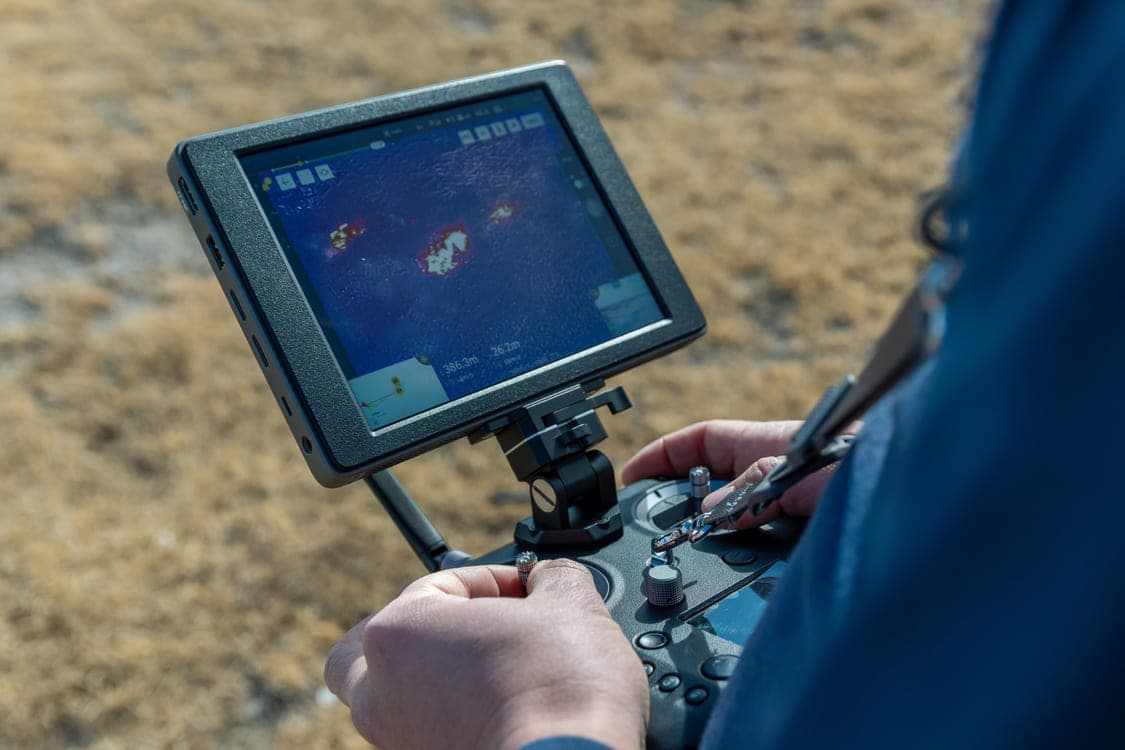
Tuakau, North Waikato
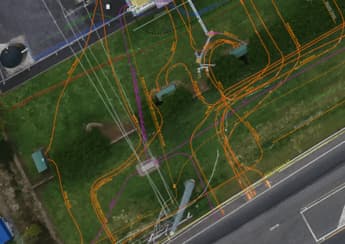
Services Detection & Mapping in Tuakau
A local power network provider in Pukekohe needed expert service detection and mapping. With multiple high-voltage cables traced and marked out, duct and drainage tracing, water mains tracing and multiple communications cables in the vicinity, the project required our specialist services and expertise.
Read the case study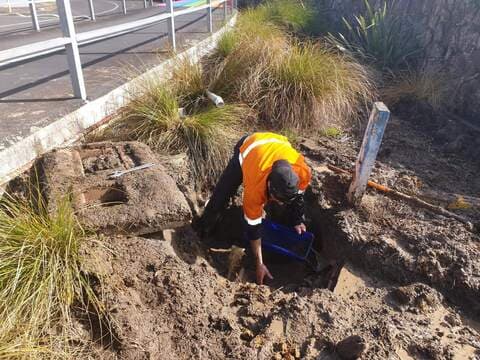
West Auckland
Campus Leak Detection & Repair
After suffering long-term issues with water loss, system configuration and location, Utility Works was engaged to find and repair the leaks at a West Auckland campus. The site spanned over 150 acres with extensive buildings and intertwining historic and modern piping networks. The project involved extensive system isolation and configuration testing, GPR and pipe tracing, re-mapping and full leak detection surveying. Once the losses were located, over 14 underground leaks were excavated and repaired. From initial engagement to completion of the first stage of repairs, the campus saw an 83% reduction in minimum night-flow loss.
Read the case studyGPR Scanning in Papakura: your questions
My Papakura house was built in the 1960s. What is the water pipe likely to be?
Will beforeUdig plans show everything under my Papakura berm before I cut a new driveway?
Ready when you are.
Tell us what you’re seeing or what you’re planning. You’ll get a straight answer, a free quote and one crew that does the whole job.
Mon–Fri 7am–5pm · Waiau Pa, South Auckland · Auckland, Franklin & North Waikato