
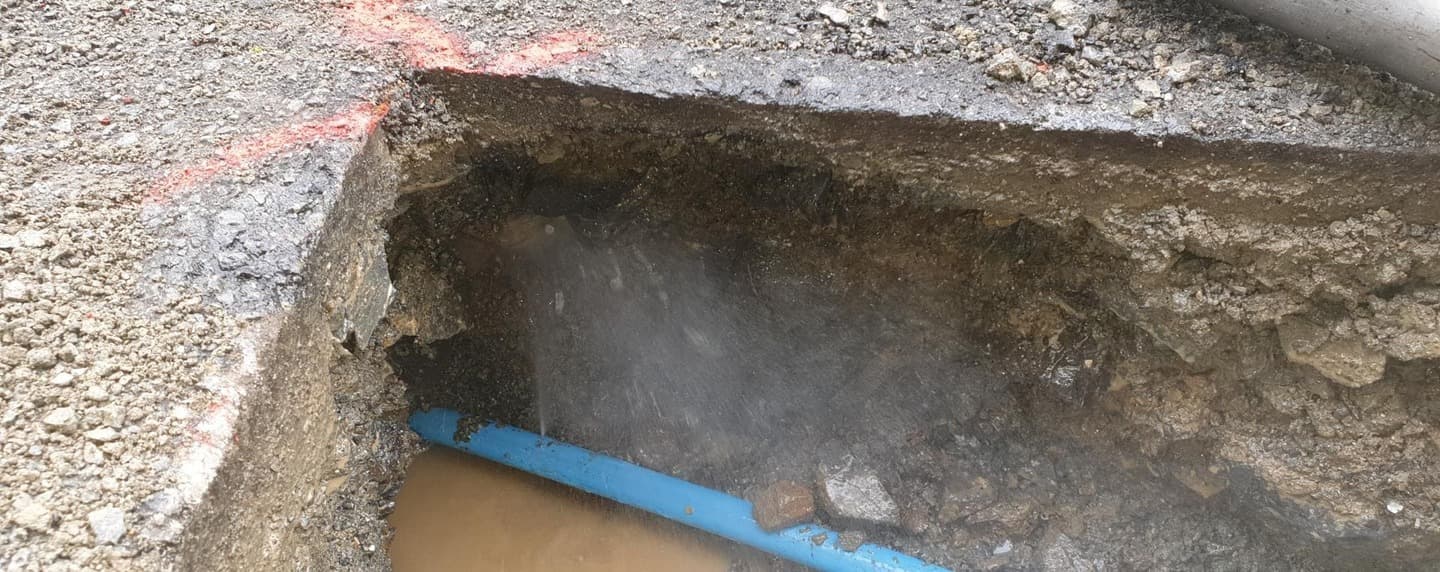
Leak Detection in Mercer
Local leak detection for Mercer and the wider North Waikato & Hamilton area
Since 2015Own locators, hydro-vac & diggersAuckland · Franklin · North Waikato
Leak detection and service detection jobs can start from $300 +GST. Every job is different, so call 0800 779 588 and we’ll talk through your situation and give you an estimate.
Leak Detection for Mercer properties, sites and farms
Around Mercer most of the water underground is private: bore and river-fed lines running to houses, sheds and troughs across farmland near the Waikato River. When one of those lines leaks, the pump runs hard, the tank drops and the paddock gets wet somewhere along a run that might be hundreds of metres long. High groundwater on the river flats makes it harder still to see where the water is coming from. We trace the line, listen for the leak and repair it on the same trip from Waiau Pa.
Typical leak detection jobs in Mercer
- Walking and tracing long rural supply lines to locate a single underground break
- Leak detection on commercial premises and service-station sites alongside SH1
- Finding leaks on lines crossing wet, low-lying ground near the river
Leak Detection, in short
Water from a broken pipe rarely surfaces where the break is. We find the exact spot with acoustic listening gear, leak correlators, pipe tracing and, where it helps, ground penetrating radar and thermal imaging, so the dig is small and in the right place. Then the same crew excavates with our own digger or hydro-vac truck, repairs the pipe and reinstates the lawn, driveway or concrete. We work on everything from a single house connection to retirement villages, schools, farms and industrial sites, and we test afterwards so you can see the loss has stopped.
Full details: Underground Leak Detection & Repair →Working underground in Mercer
Mercer is a small rural settlement on the Waikato River, alongside State Highway 1 and the Waikato Expressway. It is better known as a stop on the road between Auckland and Hamilton than as a town in its own right, with a handful of commercial premises and a scattering of houses, farms and lifestyle blocks.
Most properties around Mercer are rural, running on bores, river takes or tank supply with private pipework that may be decades old. Low-lying land near the river is prone to high groundwater, which makes trenches wet and can mask where a leak is actually coming from.
Reticulated services where they exist are managed by Waikato District Council. Because the settlement is small, we are usually called out for farm and lifestyle block work, roadside service locates and repairs on long rural water lines rather than town mains.
When Mercer’s homes were built, and what that means for leaks
The age of a house tells us what pipe and cable to expect underneath it before we arrive.
Before 1960
Mercer was a railway town. The main trunk line reached the station on 20 May 1875 and trains stopped for refreshments until 1958, with river steamers working from the landing. The older houses are the railway and river-trade cottages along the old highway, and the Mercer town district was abolished in 1962.
1960s to 1980s
Very little. The Caesar Roose Bridge replaced the ferry in 1972 and the steamers stopped in 1976. Housing from these decades is farmhouses on the surrounding land rather than streets in the village.
1985 to 2000
The station closed in 1986 and the sand-dredging yard shut in 1997, to be redeveloped as the petrol station and food court that give Mercer its service-centre role. No new residential streets.
Since 2000
The 2023 census counted 132 people and 51 dwellings. There is no subdivision growth to speak of; what is being built is on lifestyle blocks in the hills around the village, and that is the honest size of the housing story here.
What Mercer’s water pipes are made of, and how they fail
With 51 dwellings there is not much town pipe in Mercer, and what there is dates from the railway era: galvanised laterals and short old mains serving the cottages and the roadside businesses. Nearly all the water pipe around Mercer is private and rural, alkathene from bores and river takes, laid across peat and clay flats and hills over fifty years, joined and patched by successive owners, with no tracer wire and no plan.
The peat is the problem. Drained peat on the flats keeps subsiding, and the regional council's own catchment notes describe ongoing peat subsidence and land-level lowering from drainage. A rigid pipe laid level thirty years ago is now hanging between high spots, pulling joints and fittings apart, so the leaks we find here are at joiners and tees rather than pinholes. Replacement in MDPE, which bends with the ground, is usually the right fix rather than another patch.
Why leaks are hard to find in Mercer’s river flats
Waikato Regional Council's catchment summary for the Waikato at Mercer Bridge East has 62 per cent of the land flat to undulating, and the soils there are gley, poorly drained and clayey, and organic, meaning peat with a naturally high water table that keeps subsiding as it is drained. Rolling land is another 28 per cent, imperfectly drained silty and clayey soils, and the steep remainder is prone to slips. The river has been dredged around Mercer in the past, and the Lower Waikato flood control scheme of stopbanks and pump stations, built from 1961 to 1982, keeps it off the flats.
Leak detection in ground like that is a different job. The paddock is already wet, so leak water does not stand out; we isolate and pressure-test the line and listen along it rather than following the puddles. Radar depth in saturated peat and gley clay is poor, so we use it for shallow targets only and lean on tracing and hydro-vac potholes. Any trench on the flats fills with groundwater within minutes, and the walls in peat will not stand, so the hydro-vac runs as a pump and we keep open trench to a minimum.
Who owns the pipes in Mercer
Which network a service belongs to decides who fixes it, who you call first and whose plans a beforeUdig request returns.
Water supply
Waikato District's water services are run by IAWAI Flowing Waters as of 1 July 2026, but Mercer is not among the supply schemes the council lists, which cover Pōkeno, Tuakau, Meremere, Te Kauwhata and the southern towns. Most Mercer properties are on their own bores, tanks or river takes. Where a metered connection exists, the public side ends at the bylaw's point of supply by the meter and toby.
Wastewater
No reticulated wastewater scheme is listed for Mercer, so houses and businesses are on septic tanks and on-site systems in the same wet ground.
Electricity
Counties Energy's network ends at Mercer: its own description is coast to coast between southern Papakura and Mercer, then west of the river to Waikaretu. Beyond the village you are on another lines company.
Gas
Mercer is not reticulated for natural gas; Vector's network area runs to Tuakau and Pōkeno and stops there; gas here is LPG bottles.
Fibre and phone
Mercer is not on the UFB fibre schedule, so comms is Chorus copper plus wireless.
beforeUdig plans
A request returns Counties Energy, Chorus, NZTA for State Highway 1 and the expressway, Transpower where lines cross, and Waikato District Council. Everything on the farm side of the road boundary is off the plans.
One crew for Mercer: find it, dig it, fix it.
Mercer is about 40 minutes from Waiau Pa by the expressway, so travel adds little to a quote.
Get a free quoteNeed leak detection in Mercer? Call us for a free, no-obligation quote.
Free, no-obligation quote · Mon–Fri 7am–5pm · Auckland, Franklin & North Waikato
Google reviews
What customers say
“Prompt service & fair pricing. Tony and his team — sharp eye for detail and out of the box problem solving paired with a high standard of workmanship.”
Richard La Trobe · Google · October 2026
“Really happy with the work to install our underground services. Highly recommend.”
Sarah Walworth · Google · October 2026
“The only company we trust… reliable, cost effective, and honest service from A to Z. 100% confidence in this company.”
Darrel Assink · Google · September 2026
Our Projects
1–2 of 4
South Auckland
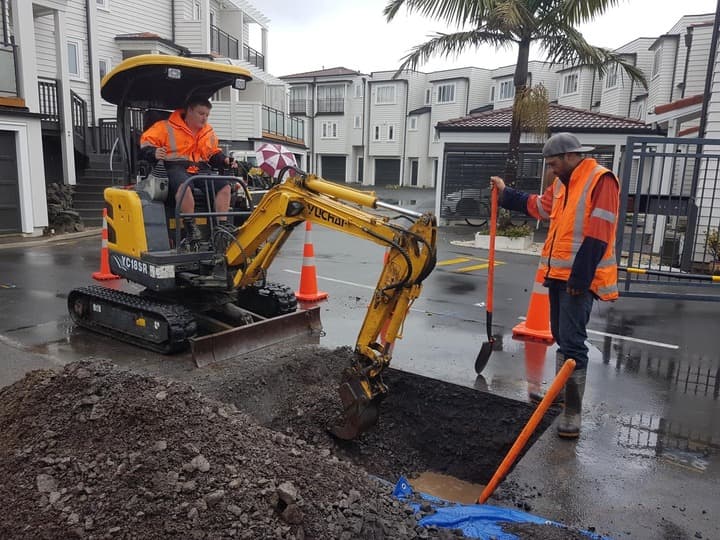
Retirement Village Water Leak Detection & Repair
A large retirement village of 58 units in South Auckland had been experiencing underground water loss. Utility Works conducted system loss testing, system mapping, mark-out and CCTV/sonde pinpointing of joint and tapping band positions, isolation point installation, followed by acoustic and infrared detection works. Once leak positions were located, we implemented strategic excavation and pipe repairs, followed by ground reinstatement and site clean-up. This successful project resulted in the accurate locating and repair of five leak positions, and provided substantial water savings to the client.
Read the case study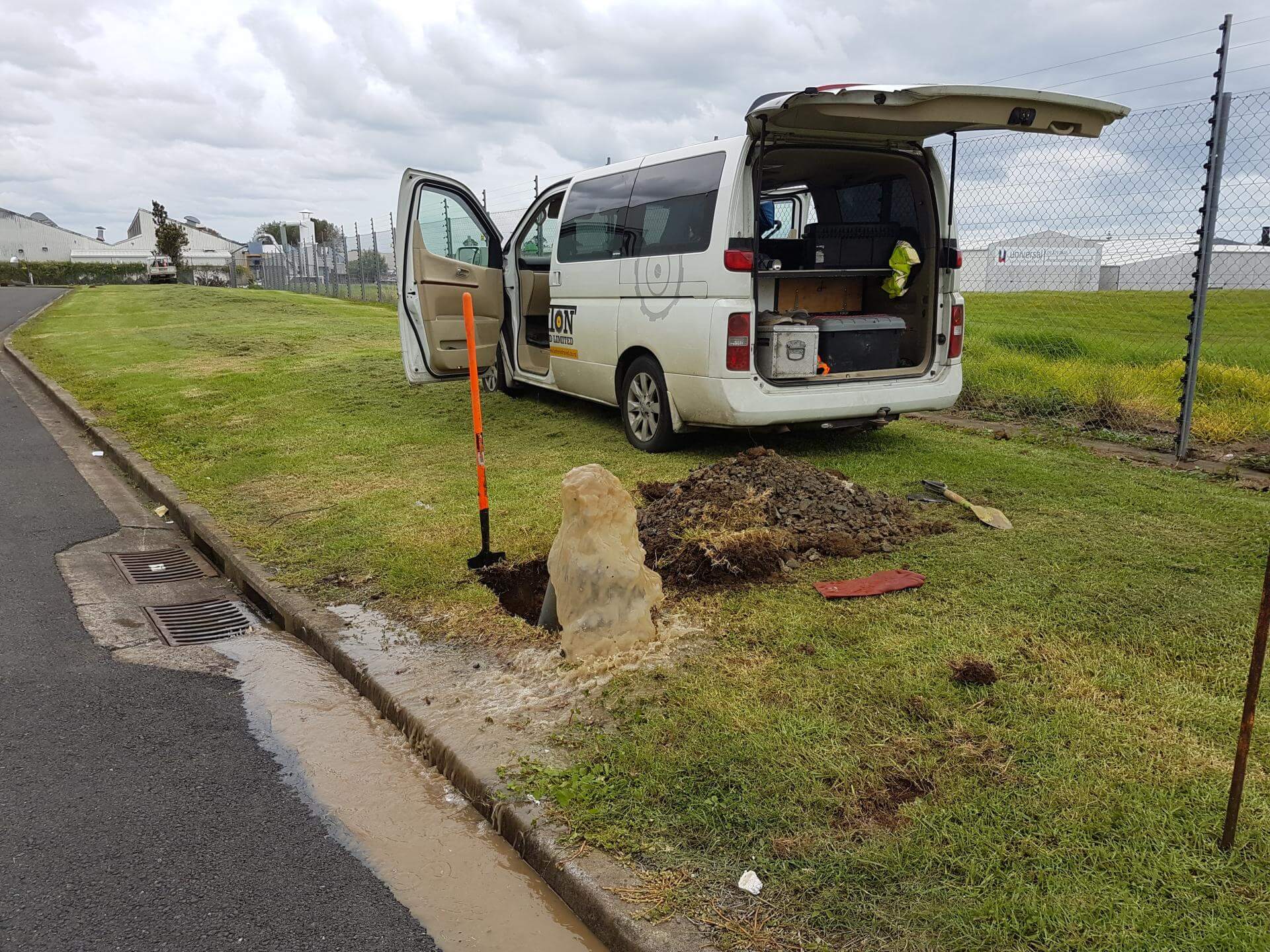
East Tāmaki, Auckland
Industrial Property Water Loss Investigation
A large, 14-hectare industrial property in East Tāmaki was experiencing a high-volume water-loss issue. The busy site was losing in excess of 170 L/min and substantial works had already been undertaken to attempt locating the leak before Utility Works was engaged. We undertook a strategic approach to the investigation including a full site audit and partial mapping of the 180mm mains and isolation testing, followed by IR, GPR, and acoustic works which enabled us to pinpoint the leak, have the position excavated, and the leak repaired overnight.
Read the case studyLeak Detection in Mercer: your questions
Is Mercer on town water, and who fixes a leak if it is?
How do you find a leak on a farm line across peat near Mercer when the paddock is already wet?
Does peat subsidence break pipes around Mercer?
Ready when you are.
Tell us what you’re seeing or what you’re planning. You’ll get a straight answer, a free quote and one crew that does the whole job.
Mon–Fri 7am–5pm · Waiau Pa, South Auckland · Auckland, Franklin & North Waikato