
Articles & Advice · 18 October 2026
Signs Your Water Main Needs Replacing in NZ
If your water main keeps springing leaks, the pressure has dropped, or the pipe is old galvanised or asbestos-cement, you may be past the point where another patch is worth it. Here are the signs a water main needs replacing rather than repairing, and what a replacement involves, across Auckland, Franklin and the Waikato.
The clearest signs a water main needs replacing, rather than patching again, are repeat leaks on the same line, a steady drop in pressure, discoloured or rusty water, and old galvanised or asbestos-cement pipe that has reached the end of its life. Once a main has failed more than once, renewing the whole run usually works out cheaper and less disruptive than chasing the next break.
1. The same line keeps springing leaks
One repair on an old main is bad luck. A second and third on the same line is a pattern. Galvanised steel rusts from the inside out, so once the wall is thin enough to fail in one spot it is thin everywhere. Asbestos-cement mains go brittle with age and crack at the joints whenever the ground moves. Patching buys a few months; replacing stops the cycle.
2. The pressure has dropped off
If your taps and shower have lost pressure over the years, the pipe itself may be the cause. Rust and scale build up inside old galvanised line and slowly choke the bore, so less water gets through. Poor pressure often shows up before a visible leak does, and no amount of patching will bring it back. Only a new pipe will.
3. The water is discoloured or rusty
Brown, orange or cloudy water, especially first thing in the morning or after the supply has been off, usually means the inside of a galvanised pipe is corroding. It is a clear sign the main is near the end of its service life.
4. The pipe is old galvanised, alkathene or asbestos-cement
Age and material tell you a lot. Homes and sites built before the early 1980s across Auckland and Franklin were commonly plumbed in galvanised steel, with asbestos-cement for the bigger mains in the street. Both are well past their design life. Alkathene and early black poly can also fail at fittings. If you know your main is one of these, replacement is a question of when, not if.
5. A high water bill that will not go away
A failing main often leaks underground before it fails completely. If your bill has jumped and the leak keeps coming back on the same line, replacing the main is usually the real fix. See our guide to spotting a hidden underground leak from a high water bill.
6. Ground movement, roots or past digging
Mains that have been dug around before, run through tree roots, or sit in ground that moves, such as the soft river flats and reactive clays around parts of Auckland and the Waikato, take more strain and fail sooner. A main that is both old and disturbed is a strong candidate for renewal.
Repair, renew or replace?
Not every main needs replacing. A single clean break on an otherwise sound pipe is worth repairing. A main that keeps failing, has lost pressure, or is made of a material at the end of its life is better renewed in one go. For the full picture on cost and the decision, see water mains installation and replacement. We will tell you straight which one your situation calls for.
What a replacement involves
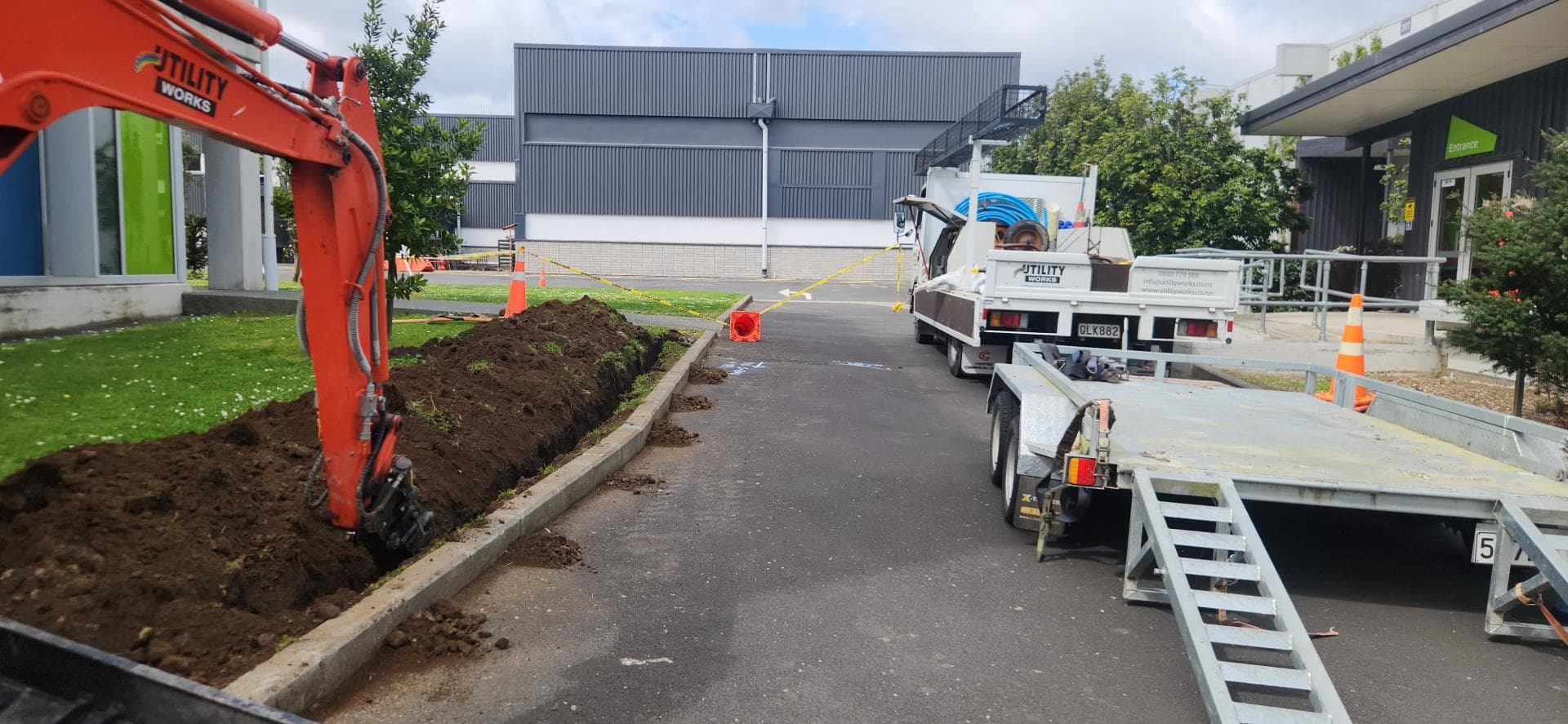
We locate the existing main, then lay a new line in modern MDPE from the boundary to the building. Where we can, we use the mole or directional drilling to pull the new pipe through without opening a trench the whole way, so your driveway and lawn stay largely intact. The same crew connects it, tests it and reinstates the surface. Because we own our machinery, there is no waiting on a separate excavator or reinstatement contractor.
Not sure whether yours needs replacing?
If your water main is ticking any of these boxes, call 0800 779 588 and we will take a look and give you an honest answer on repair versus replace. We handle residential, commercial and civil water mains across Auckland and Franklin, including subdivisions and retirement villages.
Frequently Asked Questions
Can an old water main just be repaired instead of replaced?
Sometimes. A single clean break on a pipe that is otherwise sound is worth repairing. But if the same line keeps failing, the pressure has dropped, or the pipe is old galvanised or asbestos-cement, repairing it again is usually throwing good money after bad, and renewing the run costs less over time.
What do you replace old water mains with?
Modern MDPE, medium-density polyethylene. It is flexible, so it moves with the ground instead of cracking, it does not rust or scale up like galvanised steel, and it comes in long lengths with few joints, which means fewer places to fail.
How long does a water main replacement take?
Most residential runs are done in a day, sometimes two if the line is long or access is tight. We will give you a realistic timeframe with the quote once we have seen the site.
Do you have to dig up the whole driveway?
Usually not. Where conditions allow we use the mole or directional drilling to pull the new pipe through underground, so we only open small holes at each end rather than trenching the full length. That keeps driveways, lawns and paving largely intact.
Which areas do you cover for water mains?
We replace and install water mains across Auckland and Franklin, on residential, commercial and civil sites, working from our base at Waiau Pa in South Auckland.
Let's discuss your underground project needs. Contact us today for a free, no-obligation quote.
Free, no-obligation quote · Mon–Fri 7am–5pm · Auckland, Franklin & North Waikato